
Find a partner you can actually work with.
Good partnerships take more than a signed agreement. Here is how to set expectations, handle the awkward conversations, and keep work moving.
58 practical guides. Free tools and downloads. No email required to use the cost worksheet.
 Field notes / November 18, 2026
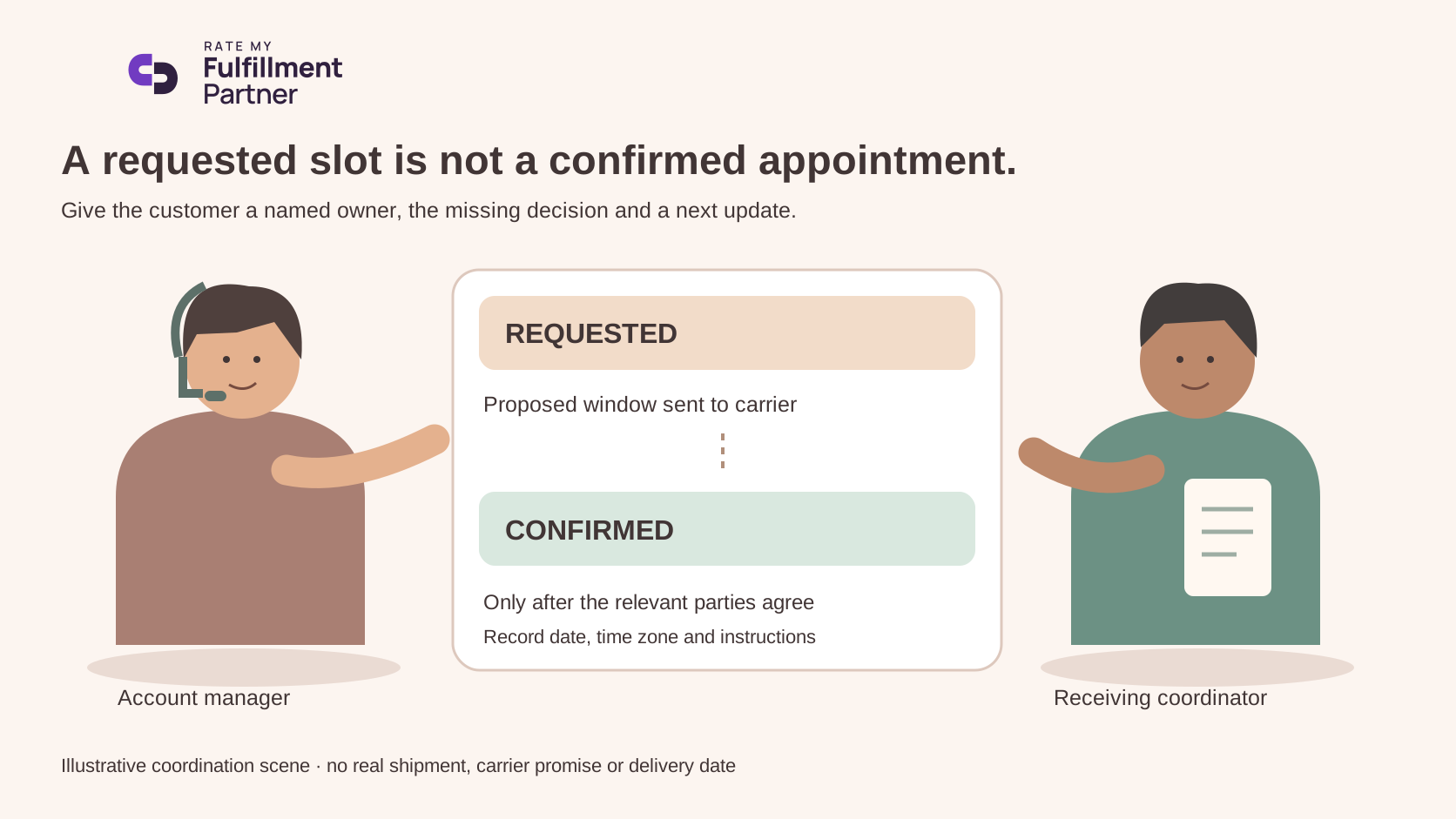
When a Freight Delivery Needs a New Appointment, Give the Customer a Real Next Step
Separate an appointment request from a confirmed booking. Give the customer one owner, the missing decision and a specific next update.
Read the guide →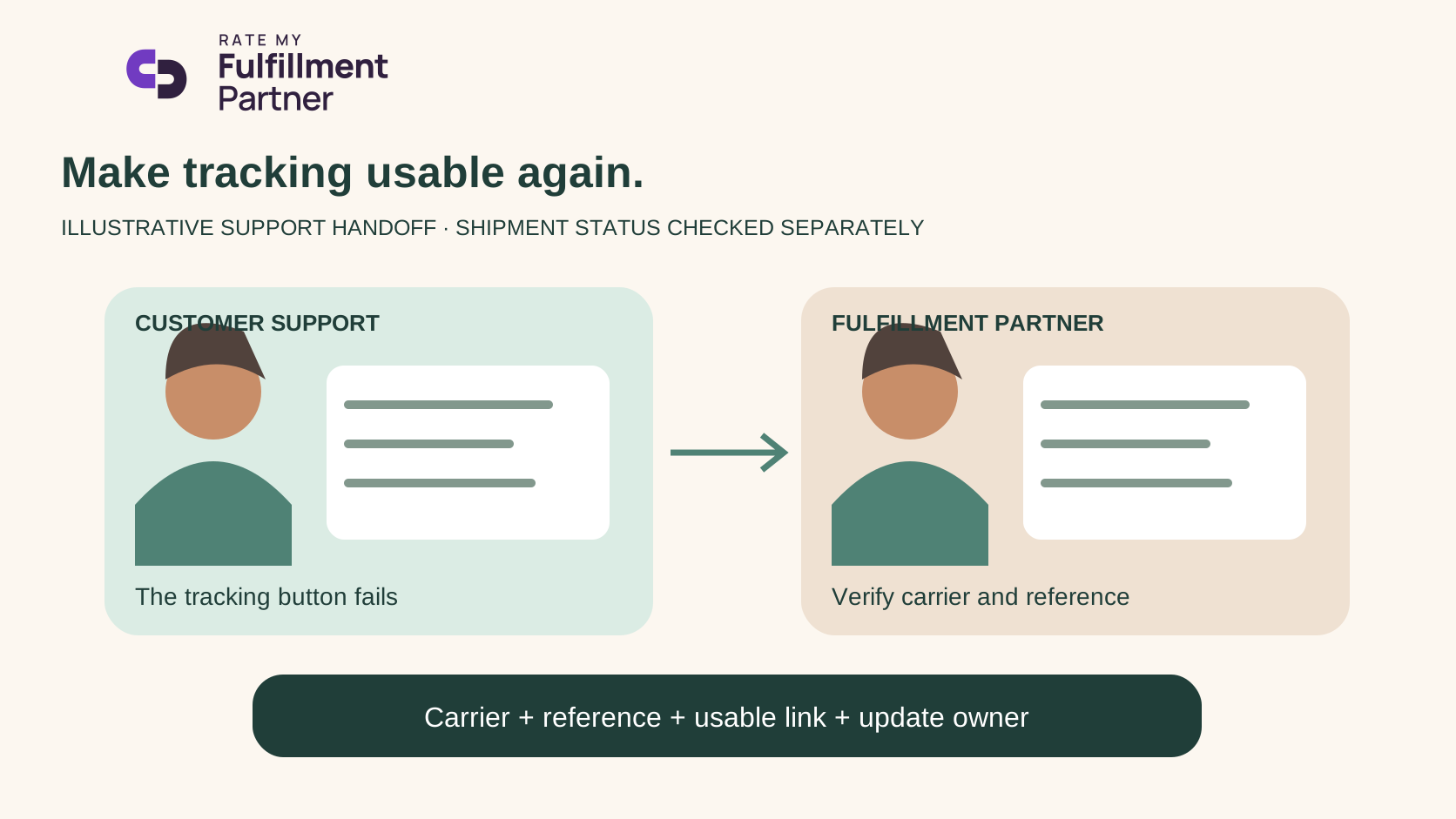 Field notes / November 17, 2026
When the Tracking Link Fails, Give the Customer a Usable Next Step
Separate a broken tracking link from a missing shipment. Give support the carrier, usable reference and next update owner before closing the request.
Read the guide →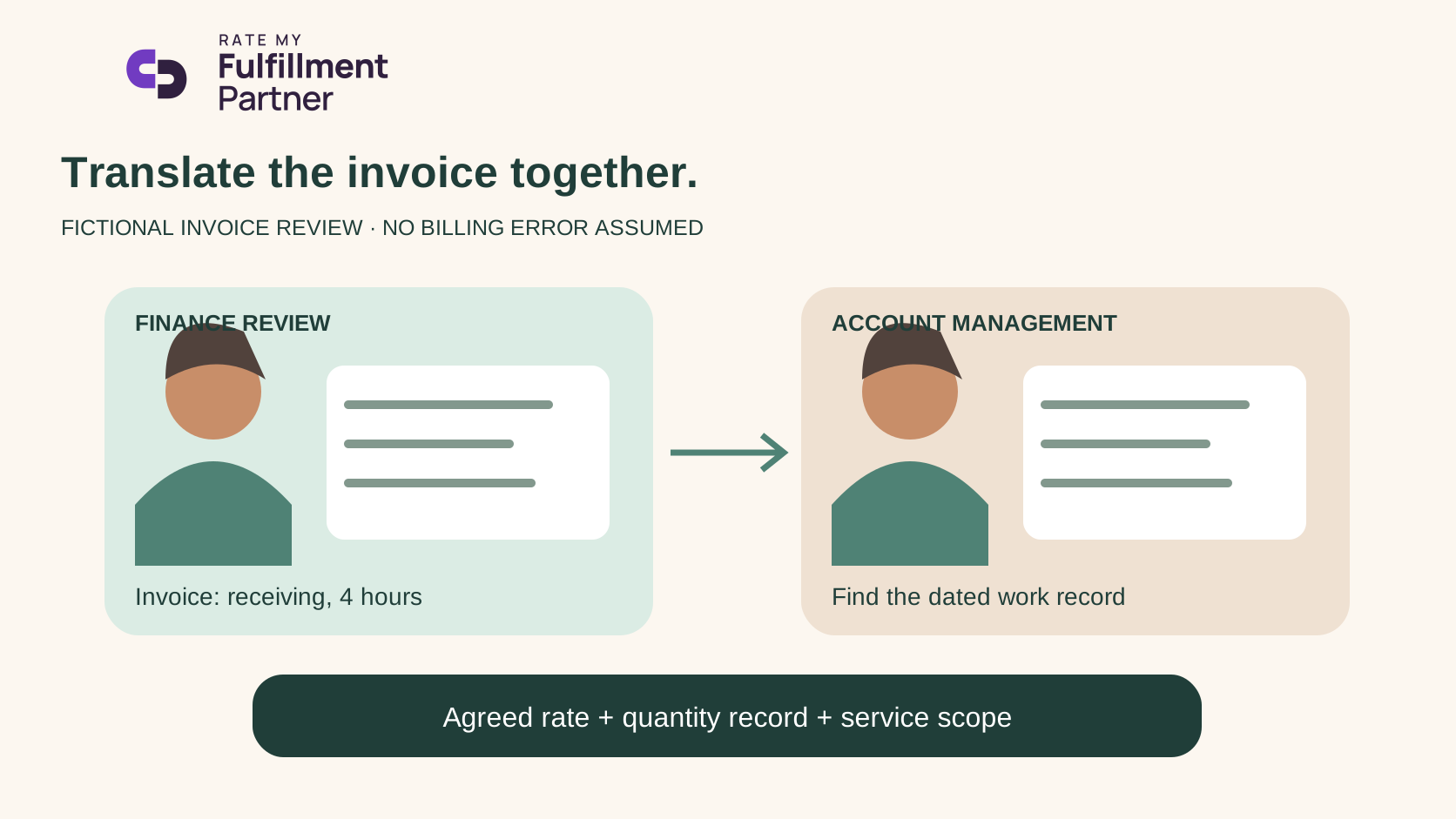 Field notes / November 17, 2026
Make the First 3PL Invoice a Shared Translation Exercise
Connect each unfamiliar charge to the agreed service, billing event and supporting record. Separate a missing explanation from a demonstrated billing error.
Read the guide →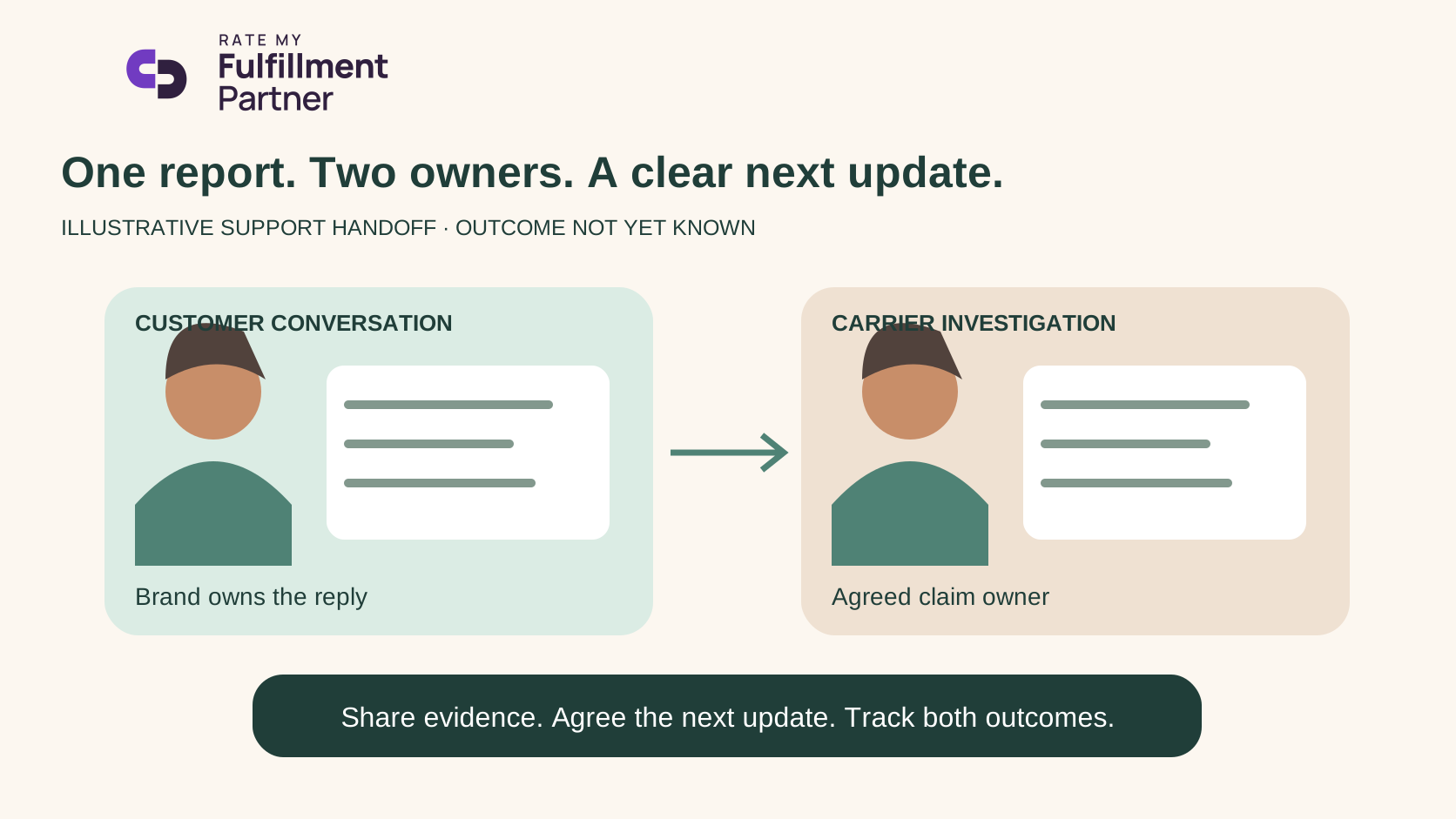 Field notes / November 16, 2026
The Tracking Says Delivered. Your Customer Says It Is Missing.
Treat the customer report and the carrier investigation as related but separate work. Agree who collects evidence, who files and who can authorize a customer remedy.
Read the guide →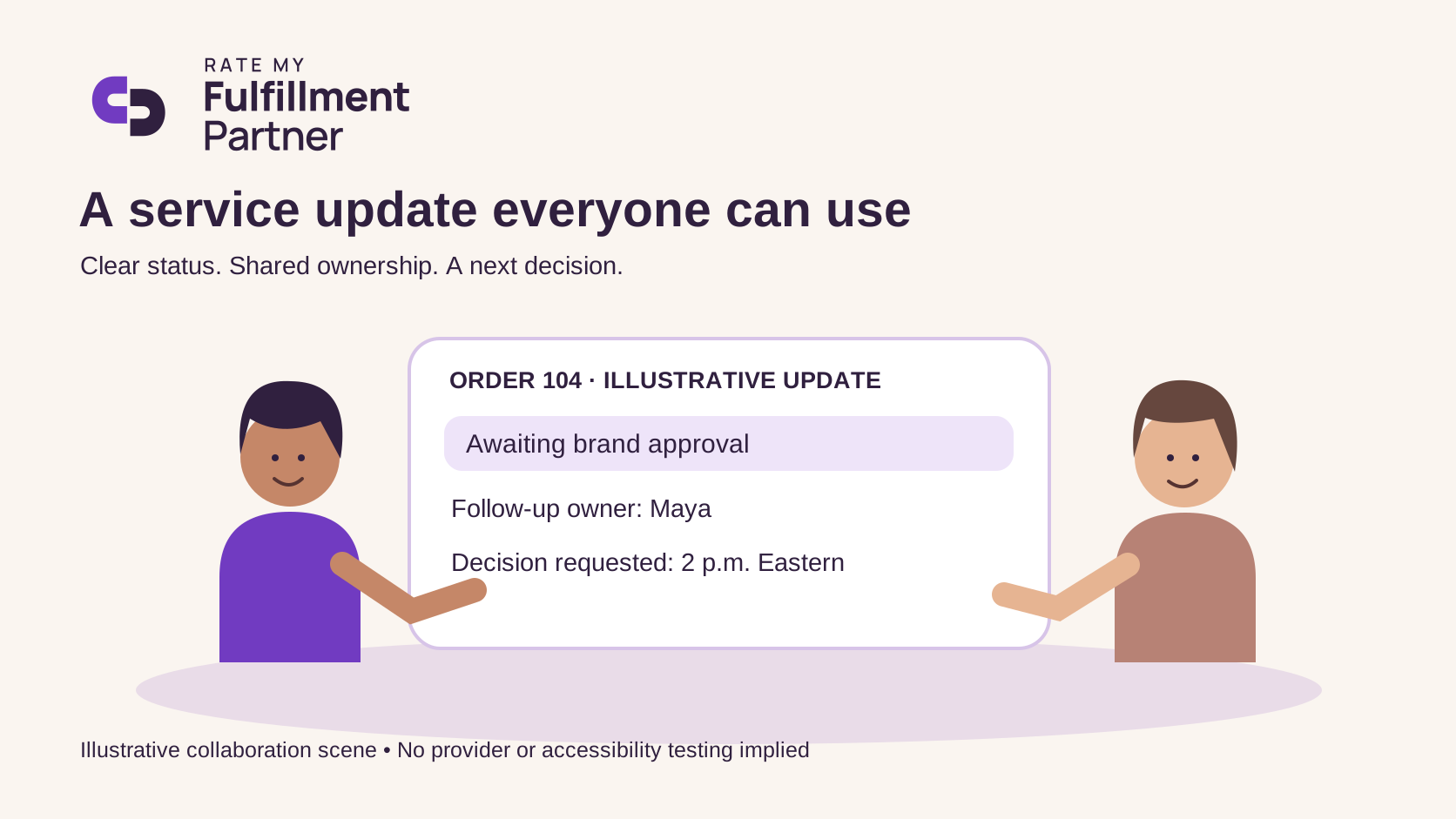 Field notes / November 14, 2026
Can Your Team Actually Use the 3PL’s Service Report?
Ask the 3PL to send a sample report in the format your team will actually use. Check whether a reader can identify the state, owner and next decision without relying on color or a screenshot.
Read the guide →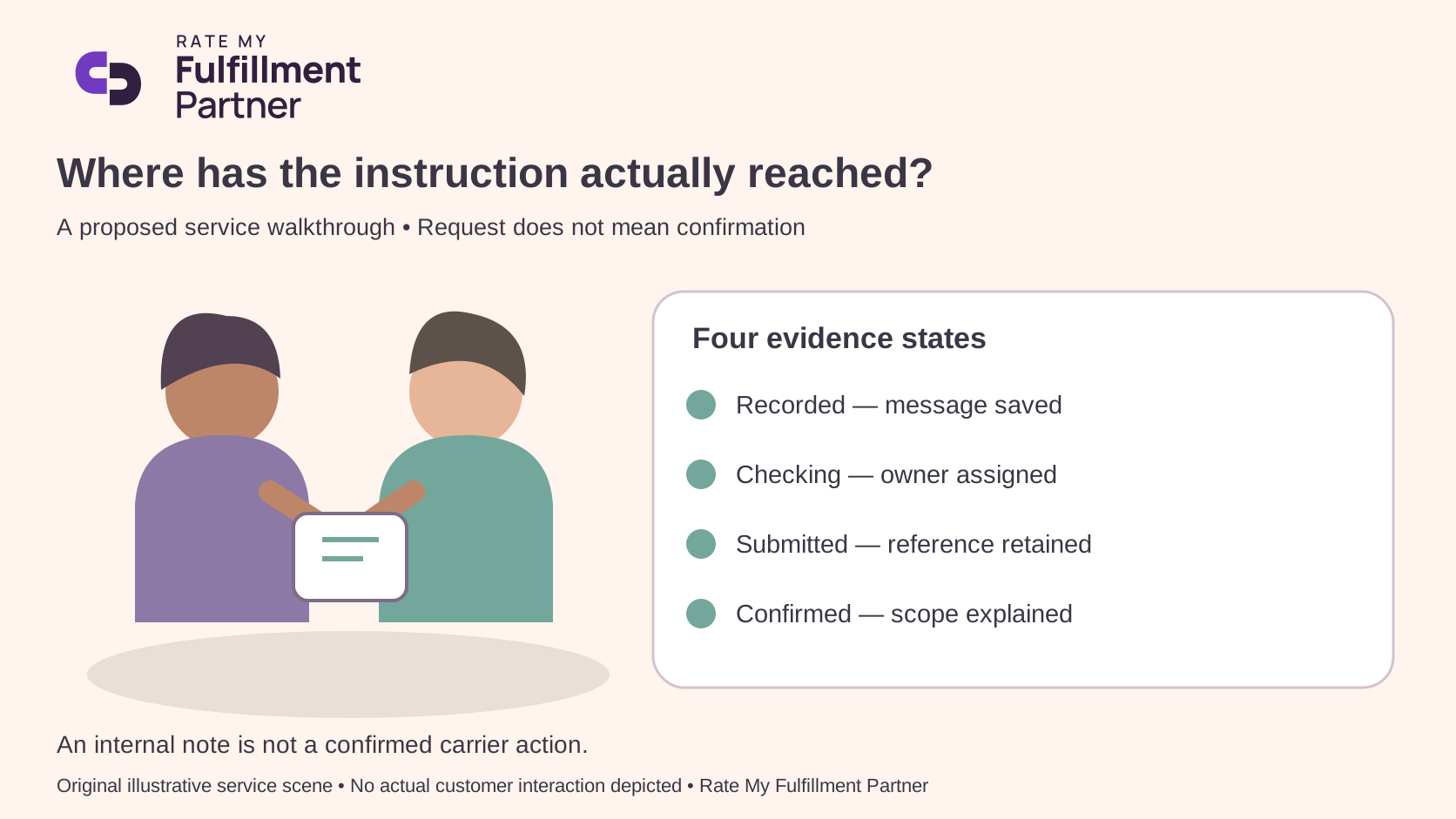 Field notes / November 14, 2026
A Delivery Instruction Needs a Destination, Not Just a Support Ticket
Tell the customer where an instruction has actually reached. A note in your support system is not confirmation that the carrier can act on it.
Read the guide →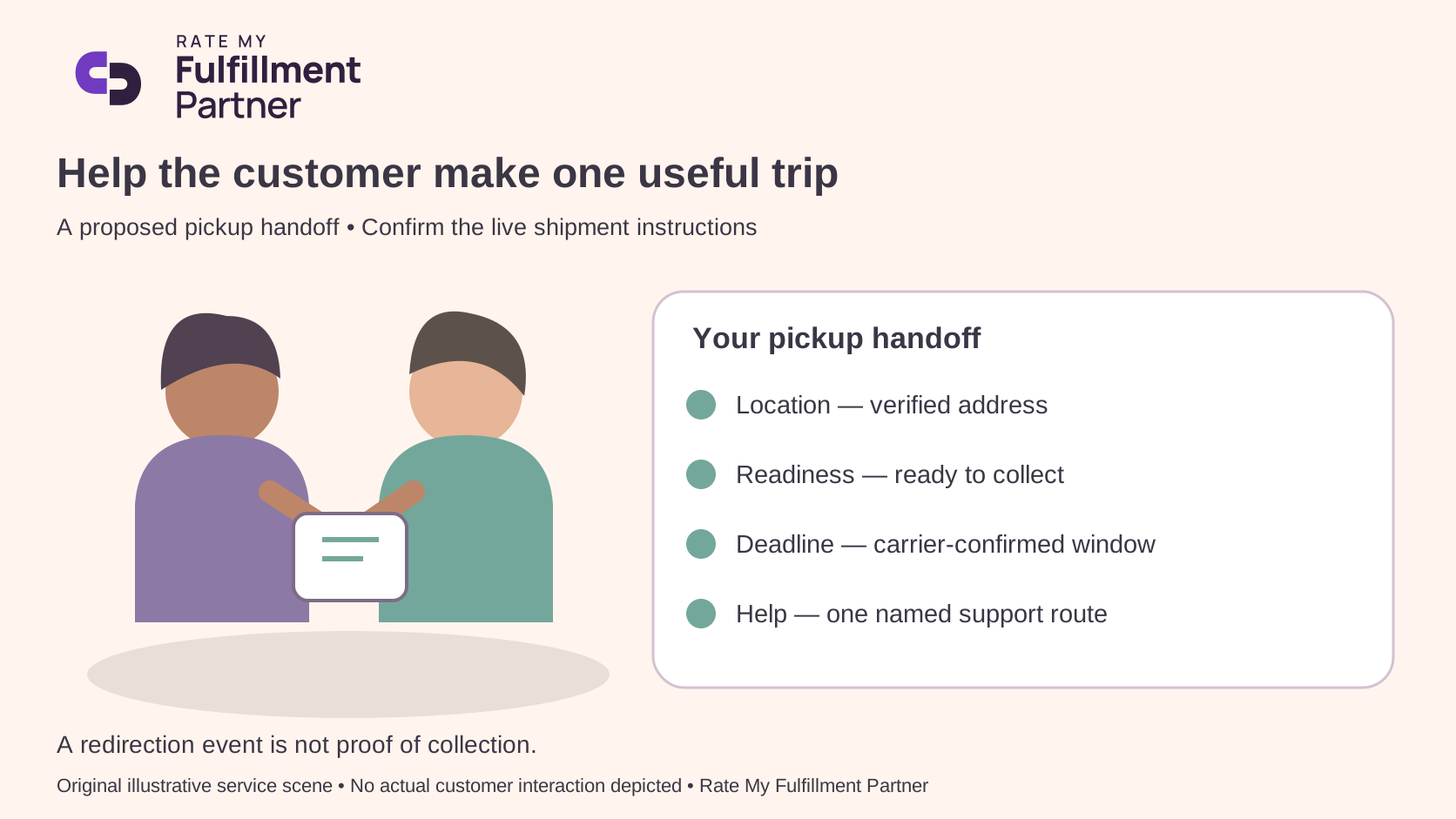 Field notes / November 13, 2026
A Pickup-Point Parcel Needs a Customer Handoff, Not Another Shipped Email
Confirm that the parcel is ready at the stated pickup location, then give the customer one clear next step and one support owner. A redirection event is not the same as a completed collection.
Read the guide →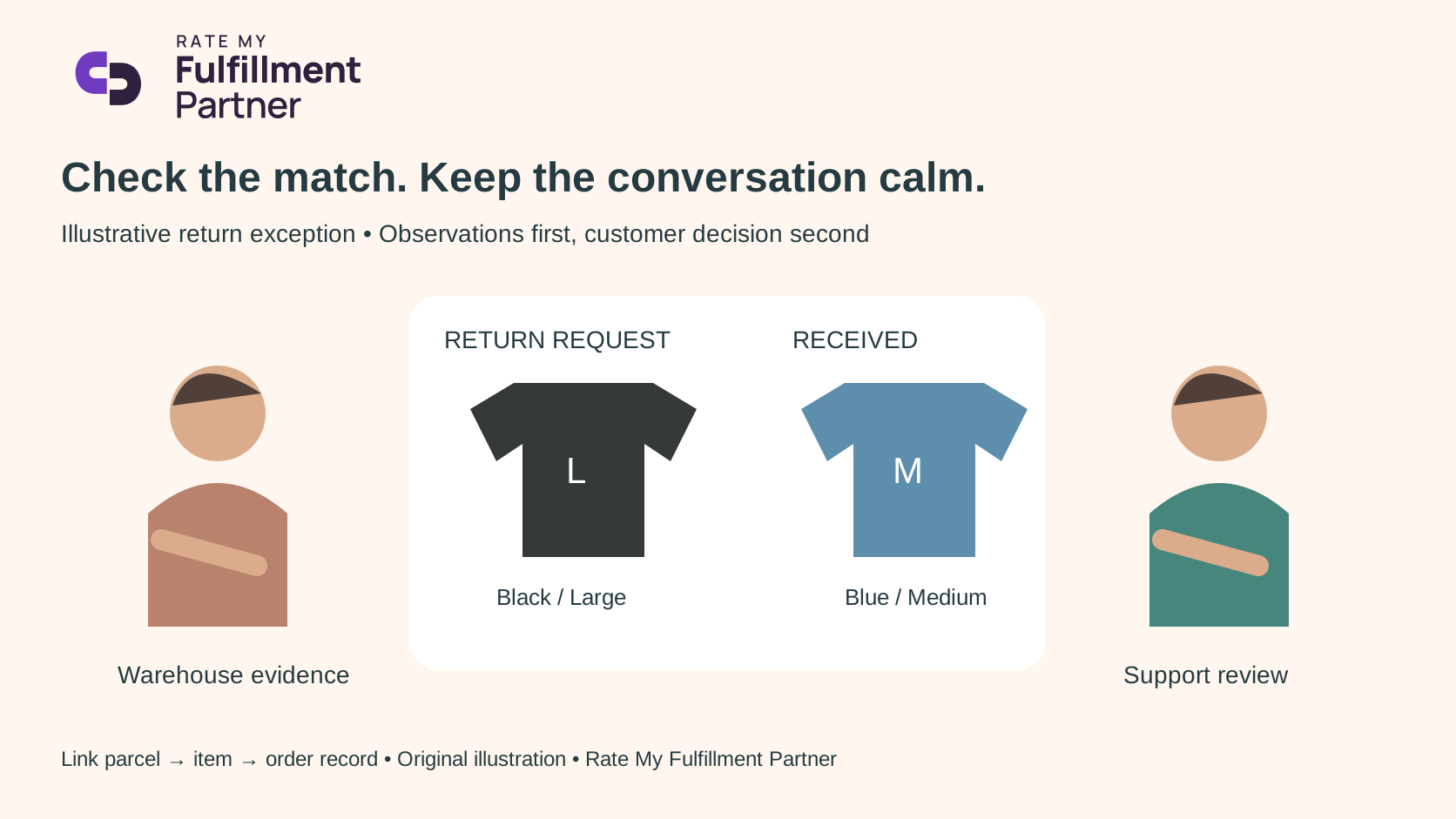 Field notes / November 13, 2026
When a Returned Item Does Not Match the Return Request
Ask the warehouse to report what it received, what record it matched and what remains uncertain. Let the brand own the customer conversation and resolution.
Read the guide →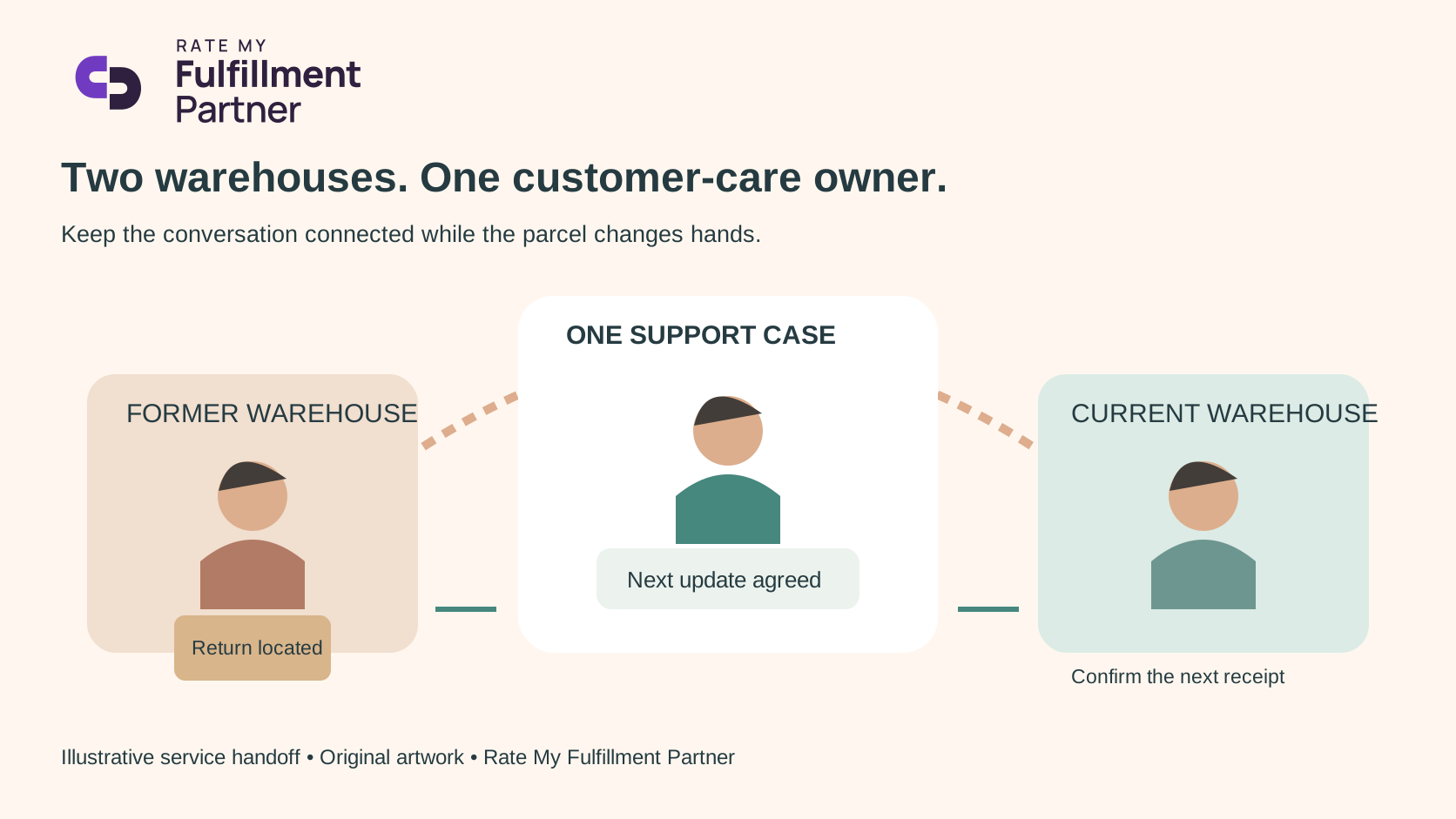 Field notes / November 12, 2026
The Return Went to the Old Warehouse. Give the Customer One Owner.
Keep one customer-facing owner while the warehouses establish custody and agree the next move. A delivered scan is a location clue, not proof that the new returns team has processed the item.
Read the guide →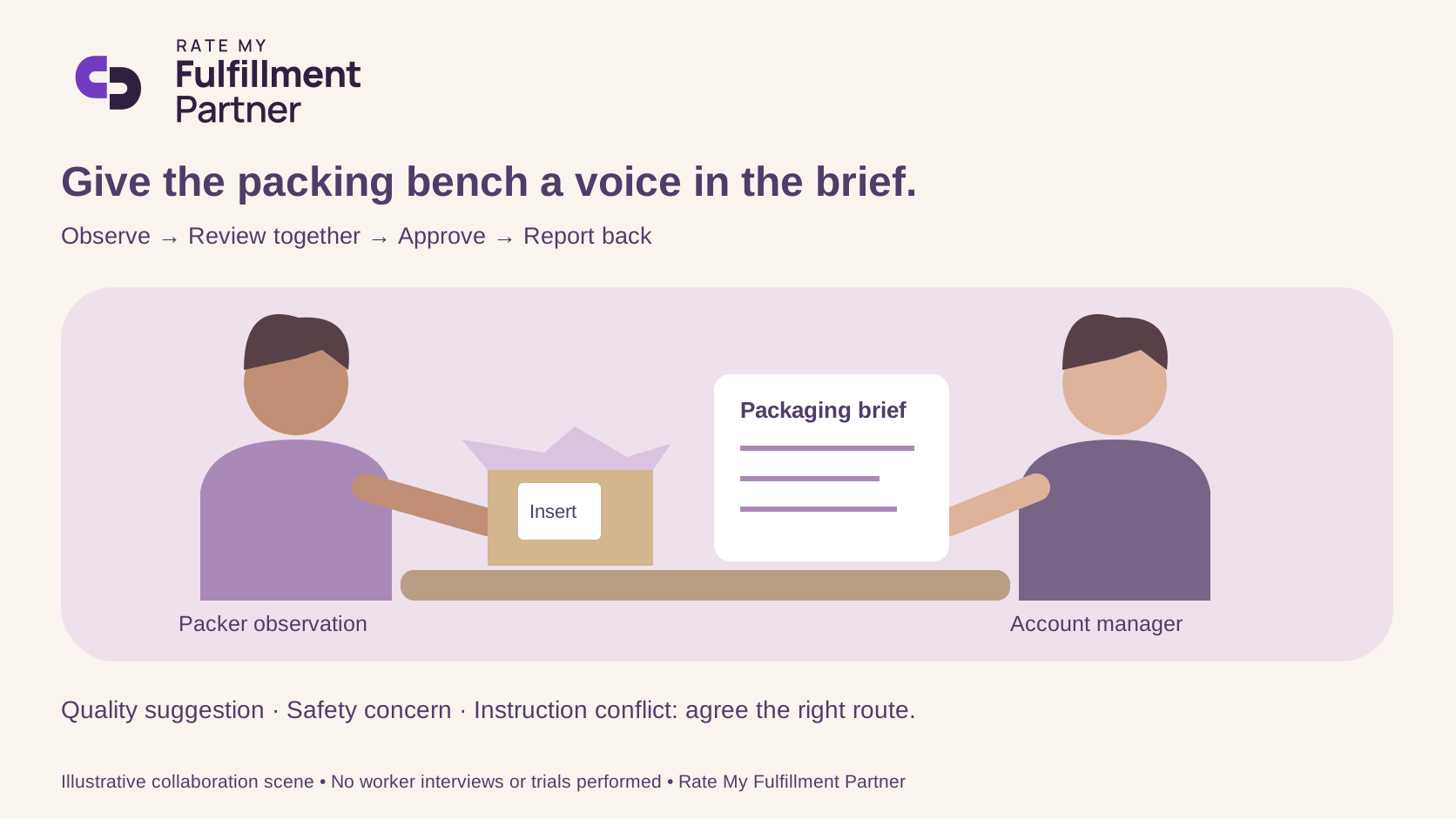 Field notes / November 11, 2026
Can the People Packing Your Orders Improve Your Packaging Brief?
Ask your account manager for a structured way to hear packer observations, review proposed changes and report decisions back. A beautiful packaging brief still needs to work at the bench.
Read the guide →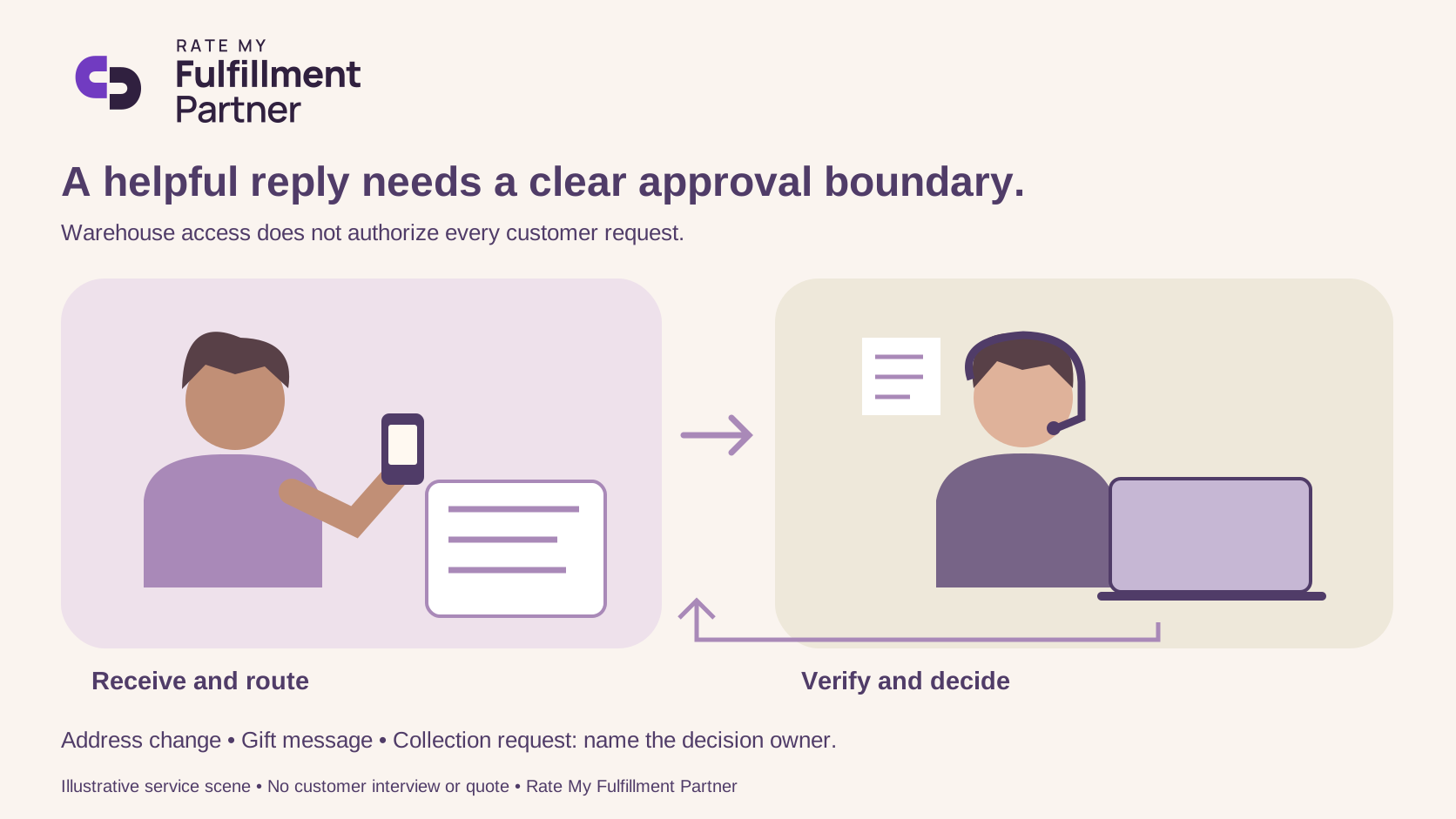 Field notes / November 10, 2026
When a Customer Contacts Your Warehouse Directly, Who Can Say Yes?
Your 3PL needs a helpful response path and a clear approval boundary. Receiving a customer message should create an owned request; it should not automatically authorize an order change.
Read the guide →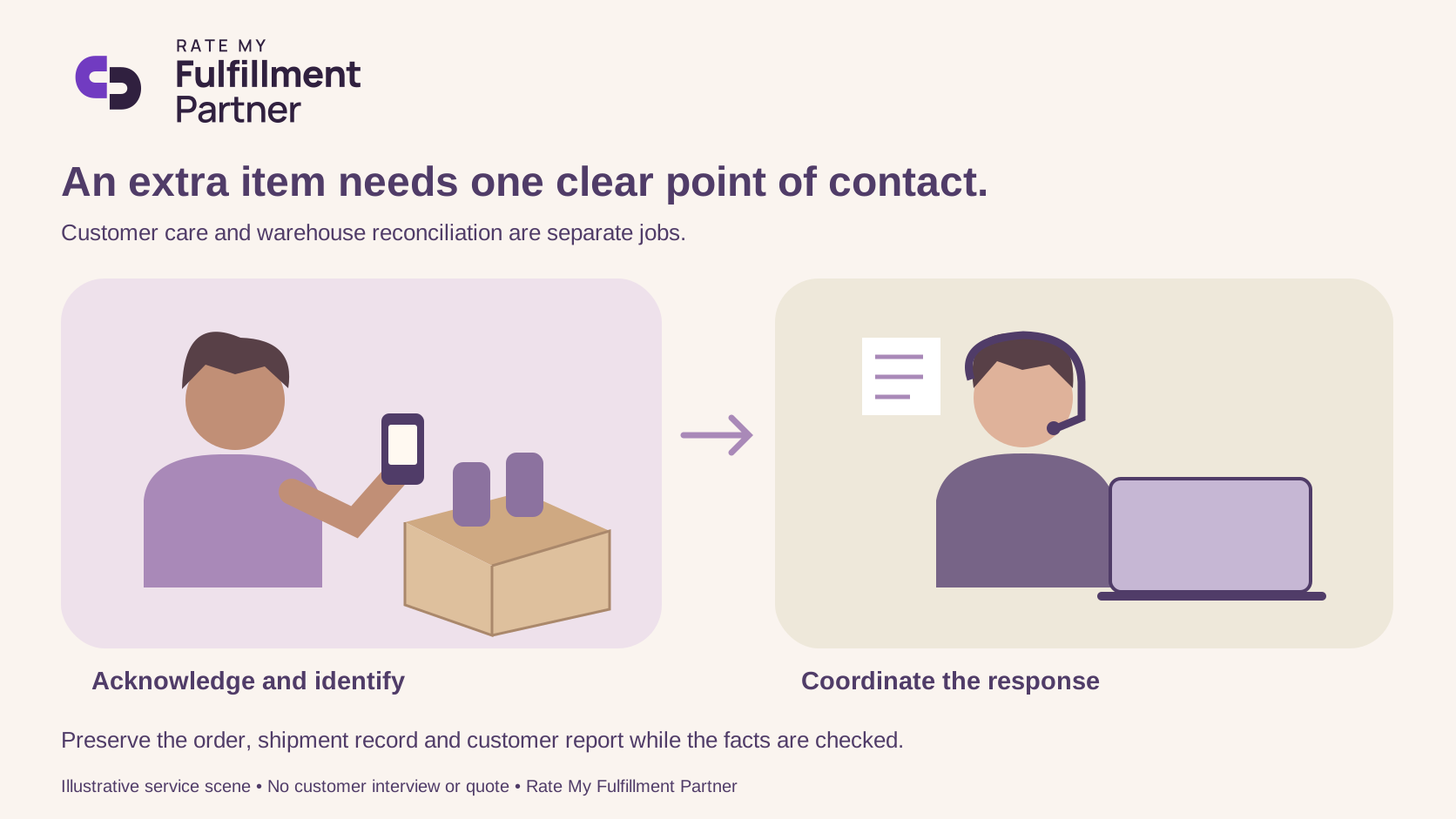 Field notes / November 10, 2026
An Extra Item in the Parcel Needs a Customer-Care Decision
Acknowledge the report, confirm what was ordered and what arrived, and give one owner responsibility for the response. Do not turn an unexplained warehouse discrepancy into an automatic customer invoice.
Read the guide →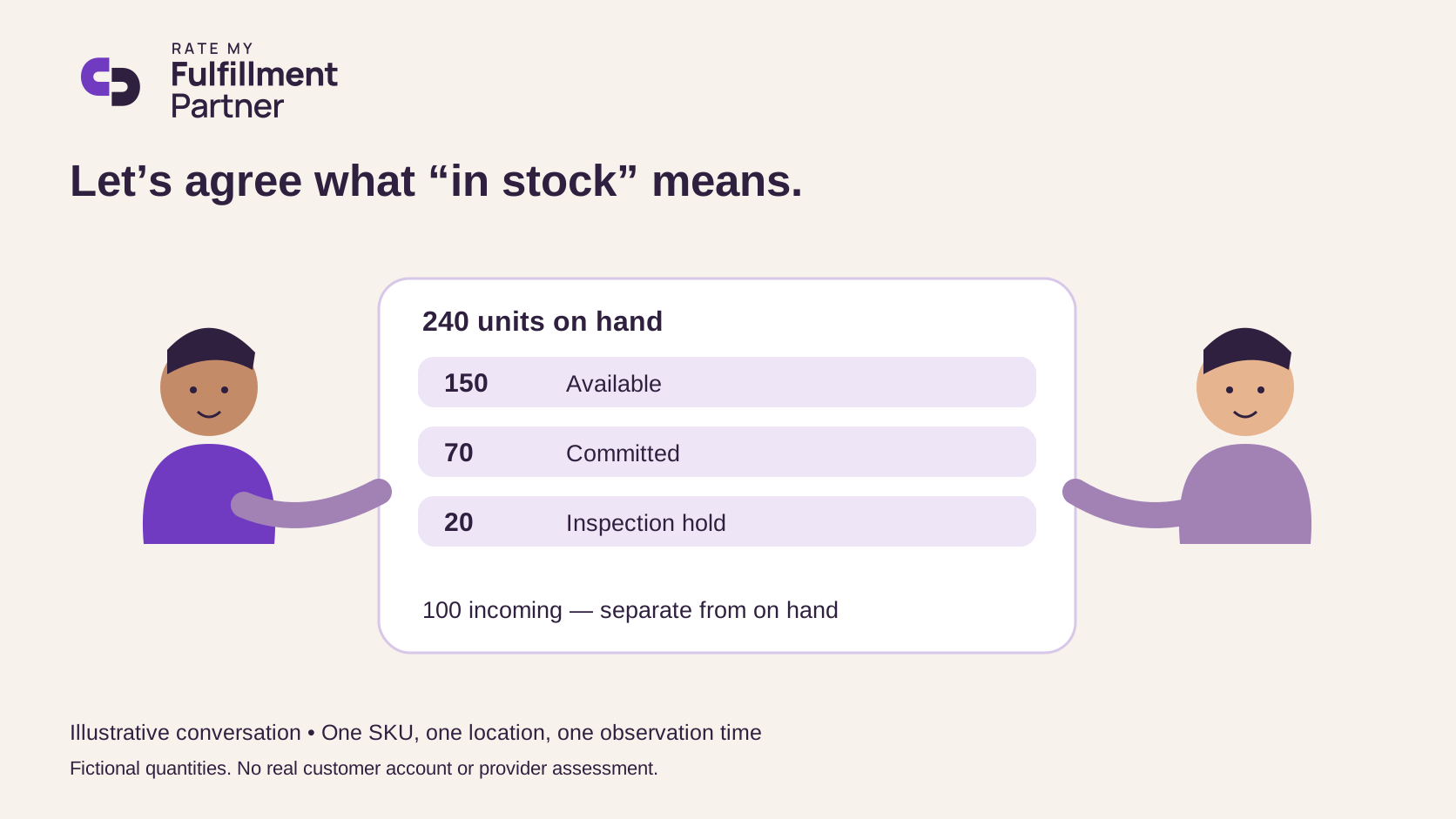 Field notes / November 10, 2026
When Your 3PL Says “In Stock,” Ask Which Stock
Ask for the quantity, inventory state, location and timestamp together. A useful stock update explains what customers can buy and what needs a decision, rather than giving one reassuring total.
Read the guide →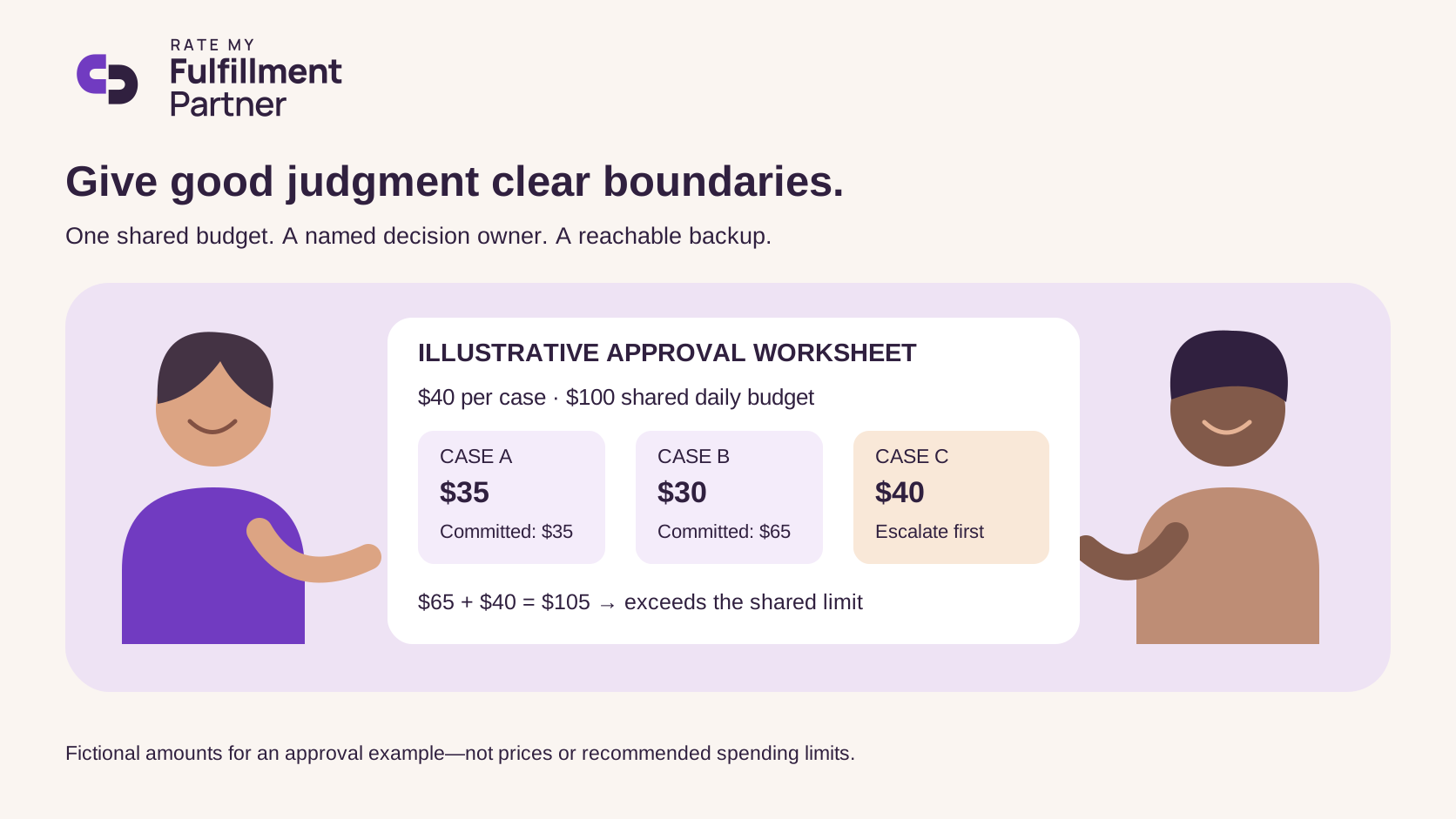 Field notes / November 06, 2026
Give Your 3PL a Spending Limit for Exceptions
Agree both a per-case spending limit and a cumulative budget. Define the permitted action, who pays and how urgent cases reach a backup approver before anyone incurs the charge.
Read the guide →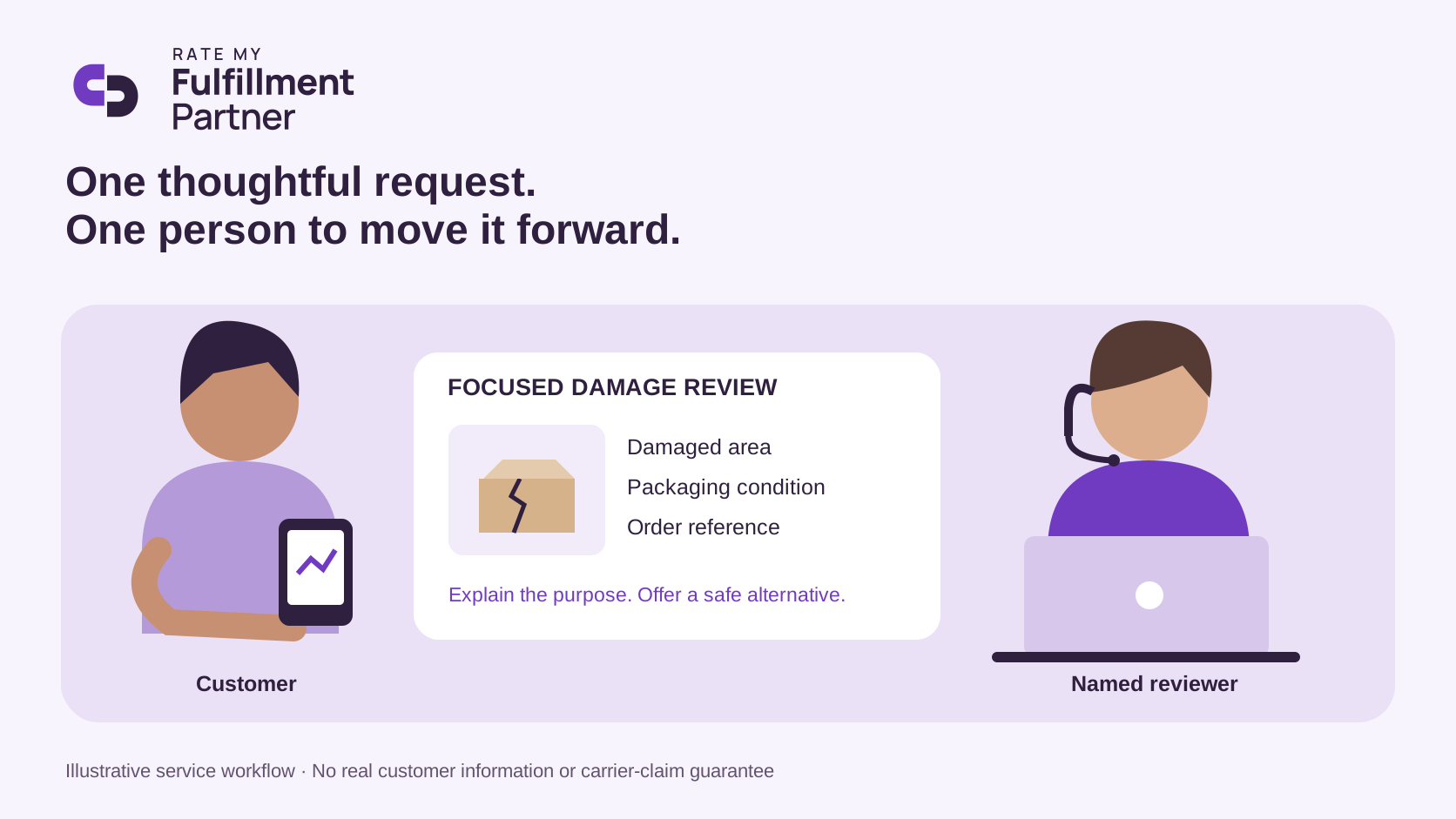 Field notes / November 06, 2026
Ask for the Damage Evidence Once—and Explain Why You Need It
Agree on one focused evidence request and a responsible reviewer. Tell the customer what each item helps resolve, where to send it and what happens next.
Read the guide →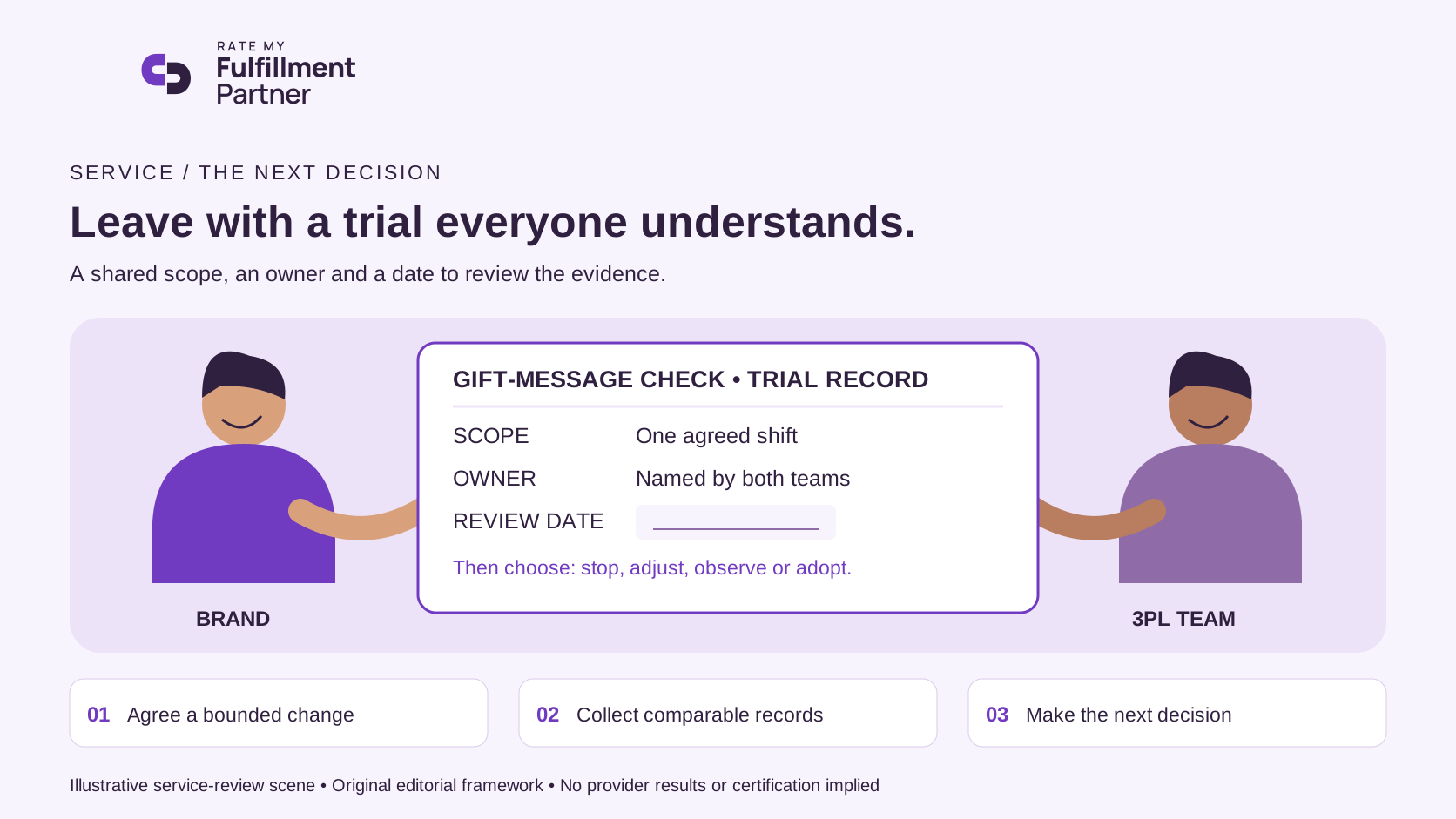 Field notes / October 31, 2026
Leave Your 3PL Service Review With a Decision, Not Another Slide Deck
Agree one bounded change, a named owner, a check date and the evidence that will determine the next decision. A meeting is useful when both teams leave knowing what happens next.
Read the guide →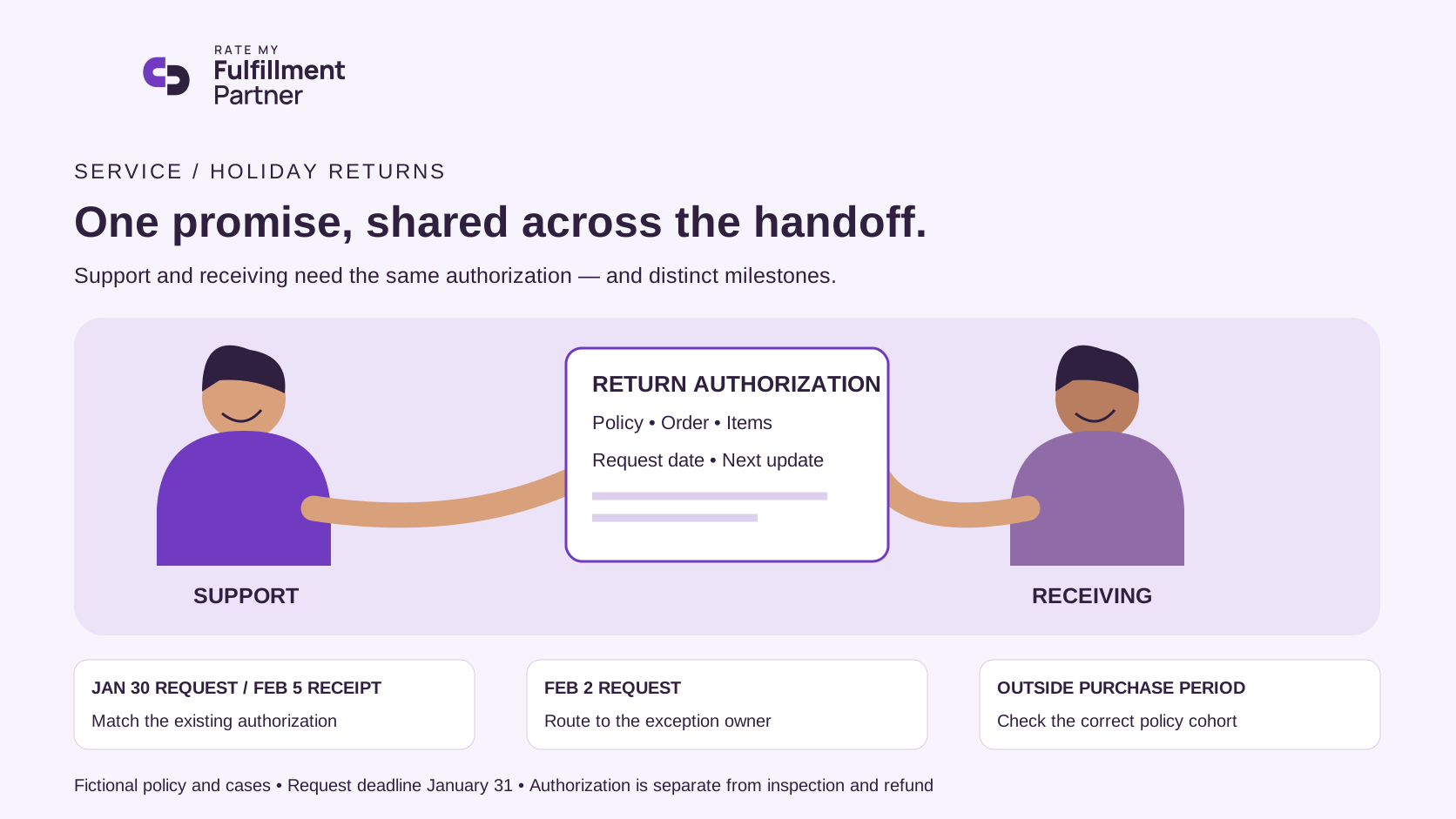 Field notes / October 30, 2026
A Holiday Return Promise Needs a Warehouse Handoff
Before announcing a holiday extension, agree which purchases qualify, which event controls the deadline and who resolves exceptions. A warehouse receiving date should not silently replace the customer’s authorized return request date.
Read the guide →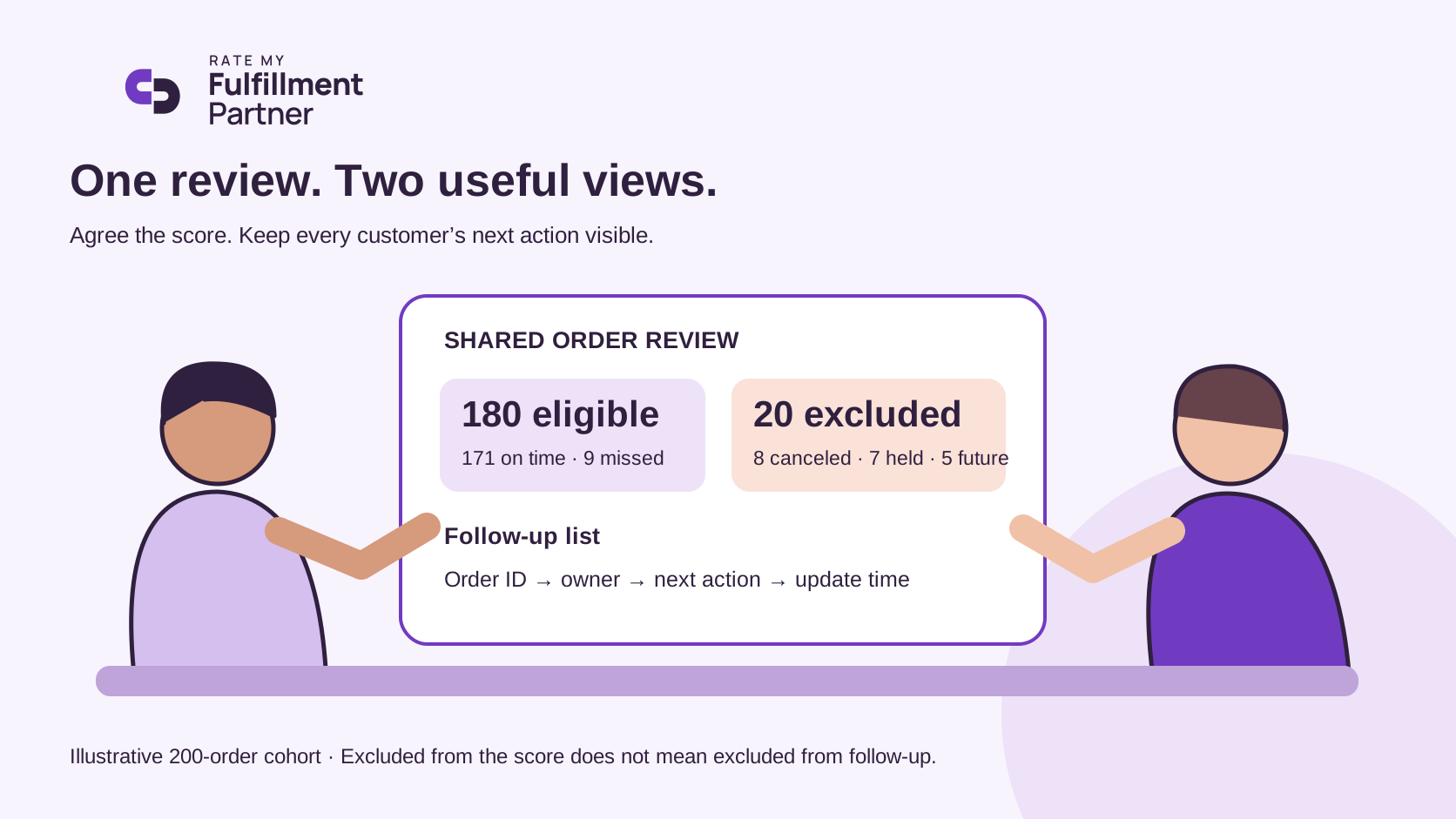 Field notes / October 29, 2026
Before a Service Review, Agree Which Orders Count
A contractual service score and a customer backlog answer different questions. Keep both, reconcile exclusions by order ID, and never let an exclusion remove the owner of a customer problem.
Read the guide →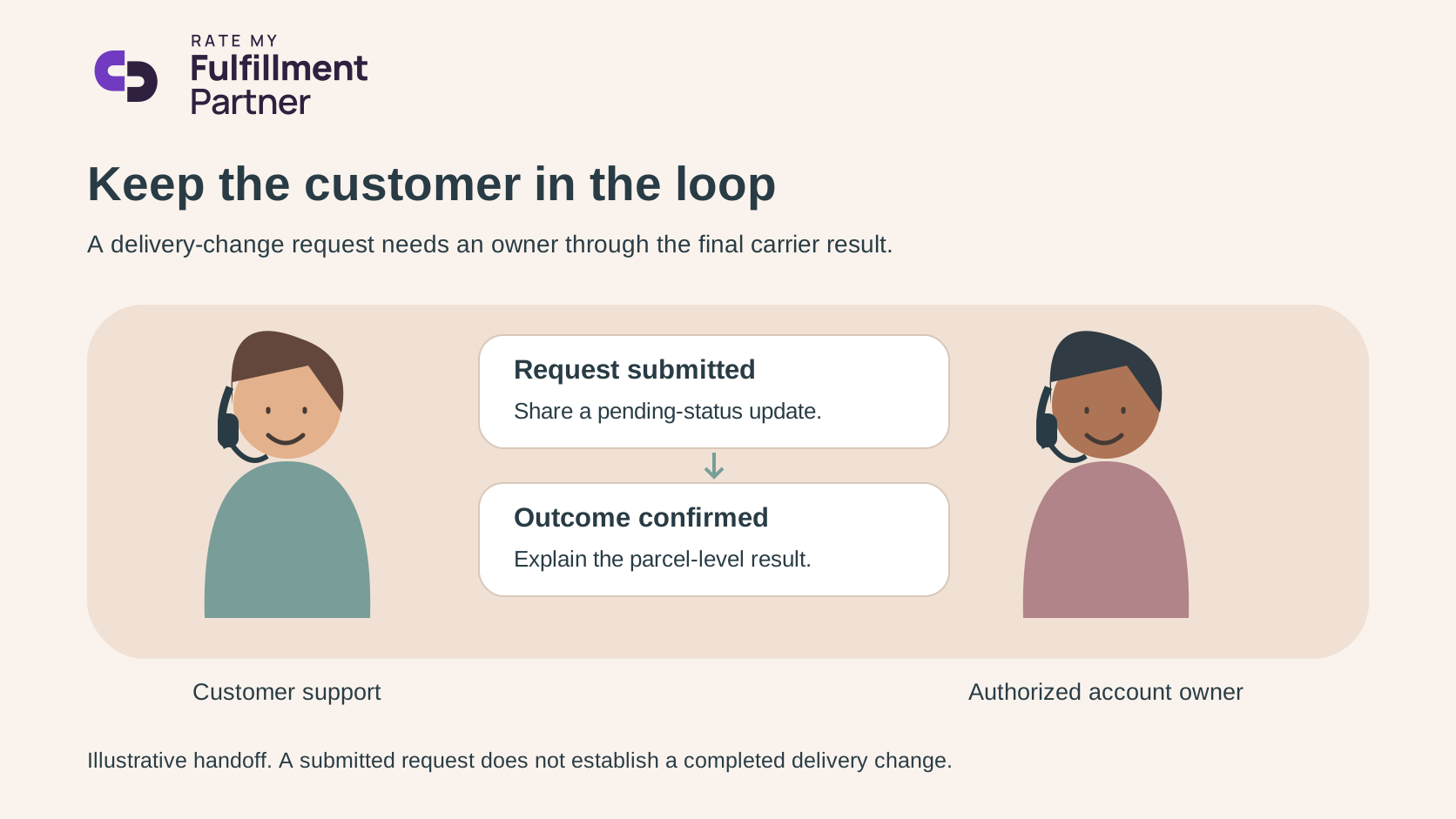 Field notes / October 28, 2026
After Dispatch, an Address Change Needs a New Kind of Handoff
Once a parcel has left the warehouse, editing the order record is not proof that its delivery changed. Agree who can submit a carrier request, who watches the result and what the customer will hear while it is unresolved.
Read the guide →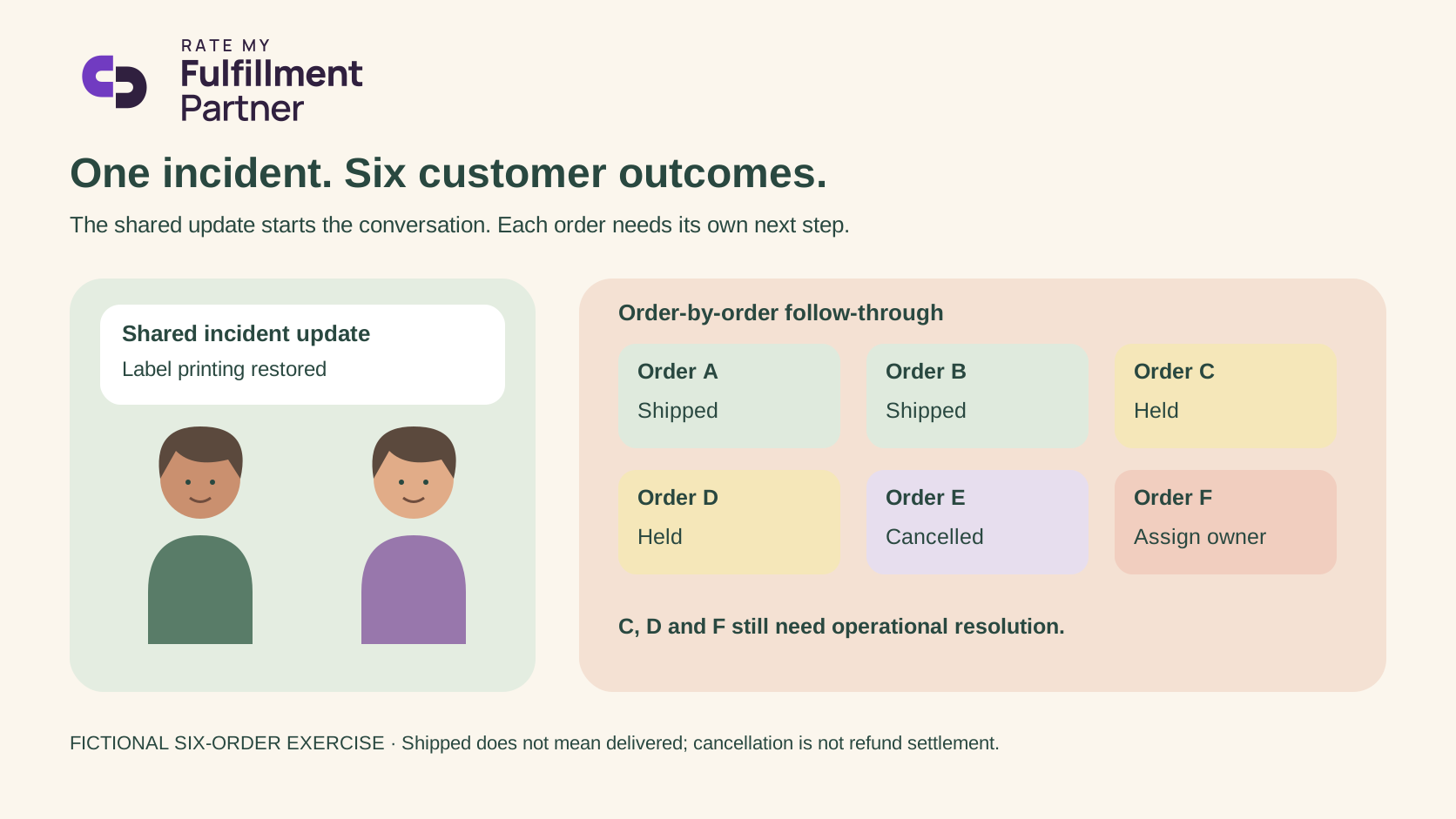 Field notes / October 27, 2026
One Warehouse Incident, Six Orders: Keep Customer Outcomes Separate
Use one shared incident record and separate order outcomes so a warehouse recovery message does not close unresolved customer problems.
Read the guide →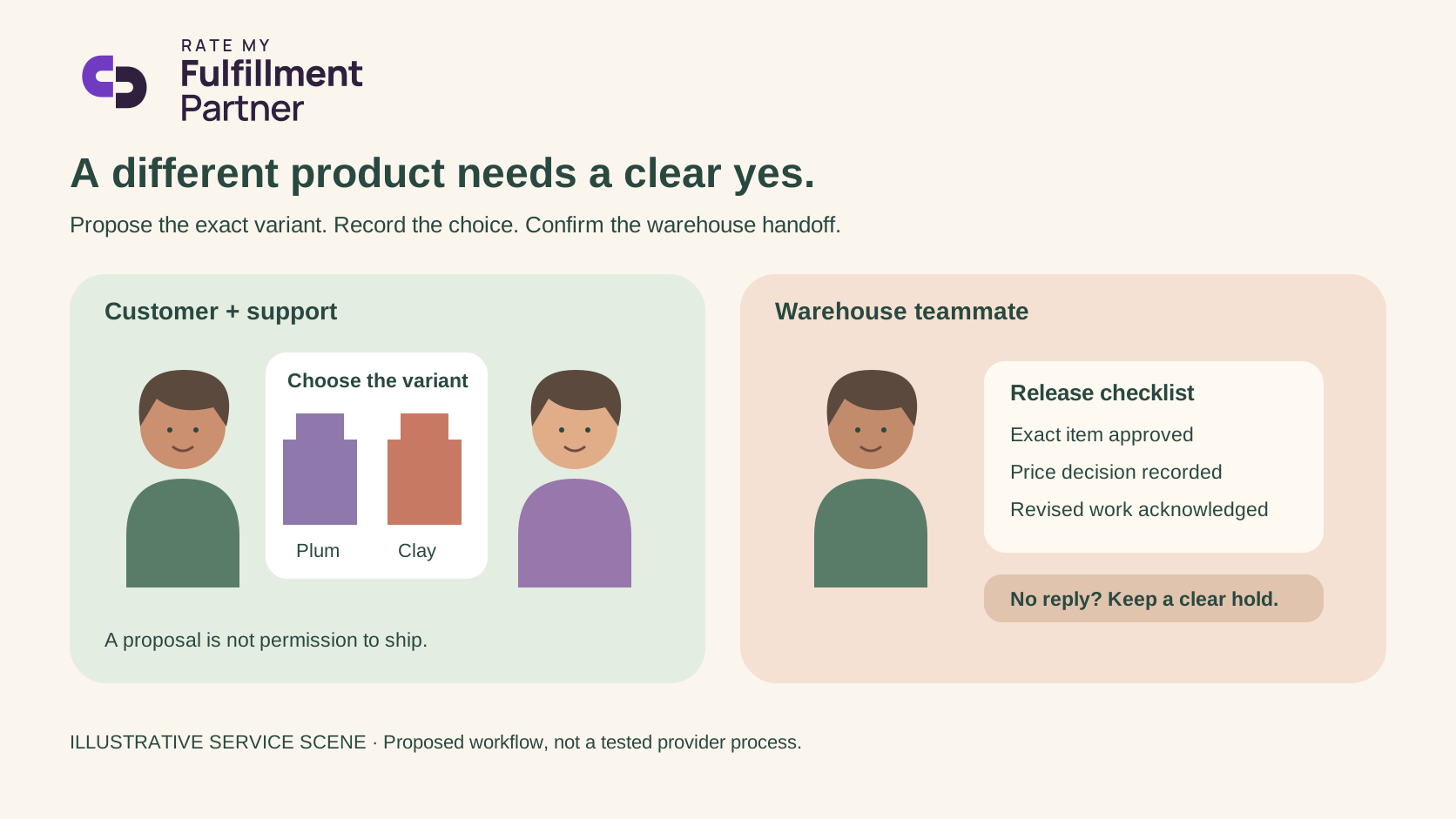 Field notes / October 26, 2026
A Similar Product Is Not an Approved Substitute
Keep an out-of-stock order on a clear decision path. Confirm the exact replacement, price and customer approval before the warehouse releases a different product.
Read the guide →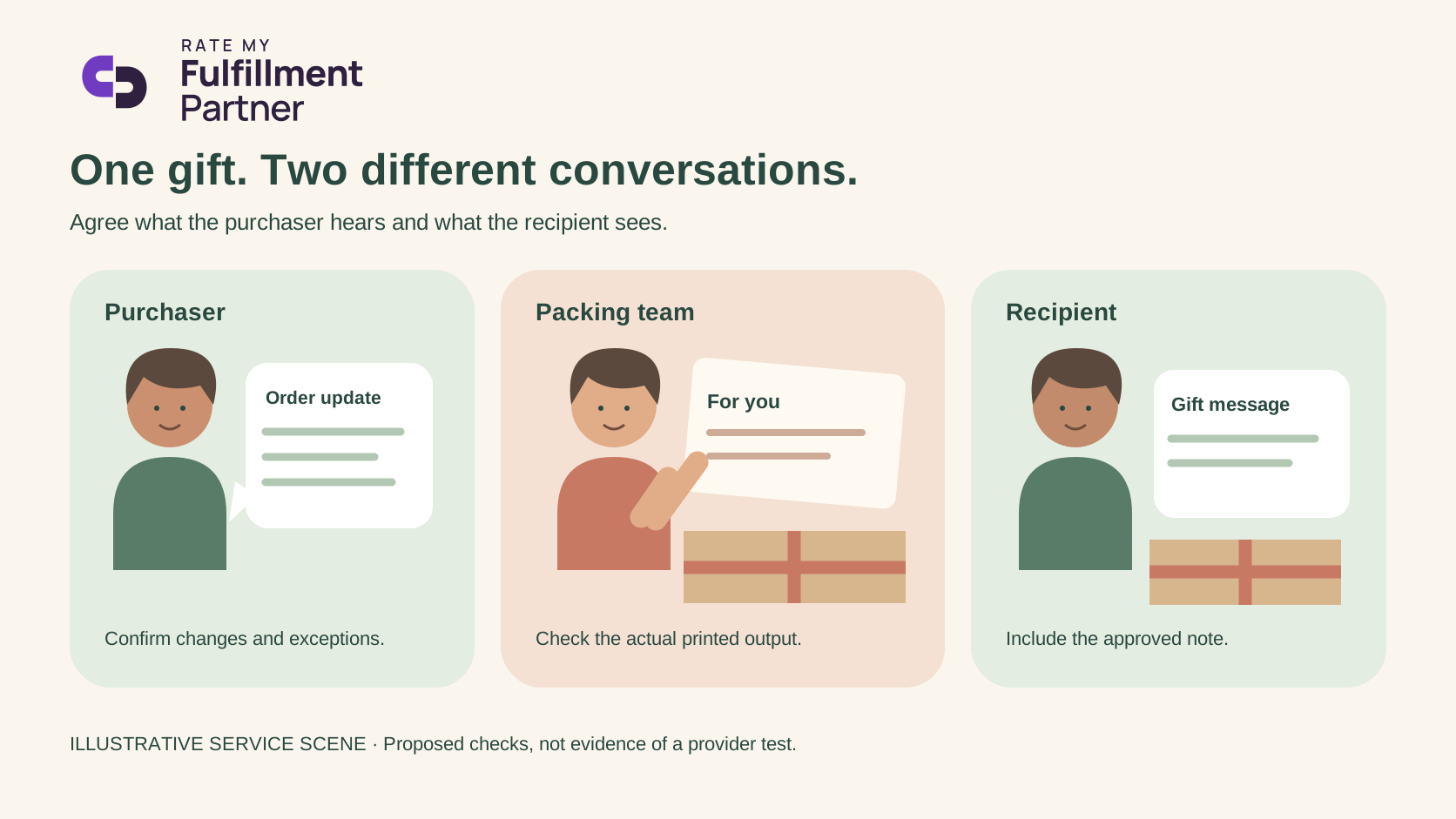 Field notes / October 26, 2026
A Gift Order Has Two Customers and Two Different Messages
Map what the purchaser receives separately from what the gift recipient sees. Test the printed output and the exception response before promising a gift-ready service.
Read the guide →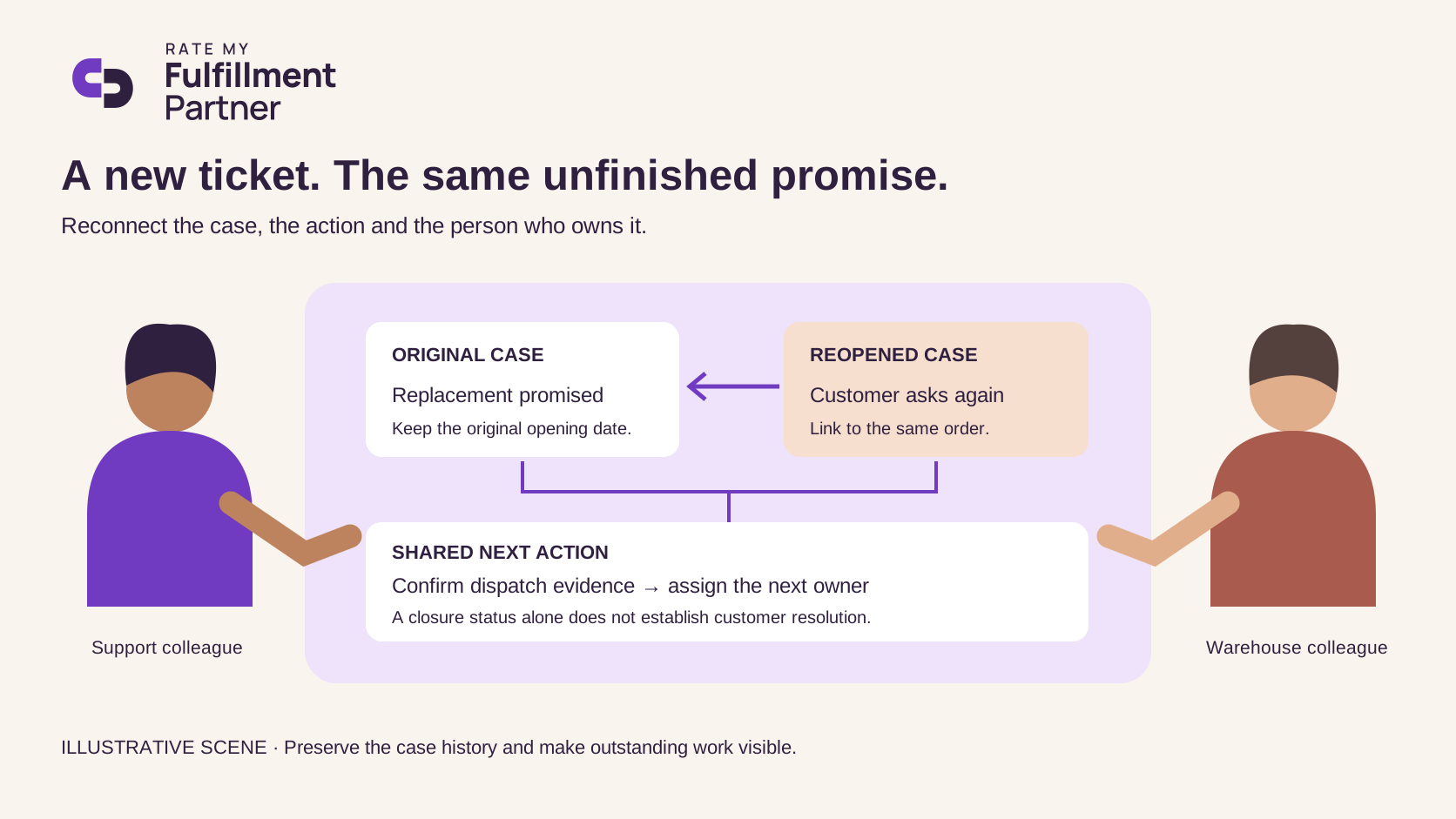 Field notes / October 25, 2026
When a Closed Fulfillment Ticket Comes Back
Review a fixed group of cases through a defined follow-up date. Link reopened tickets to the original problem and agree what evidence makes each case complete.
Read the guide →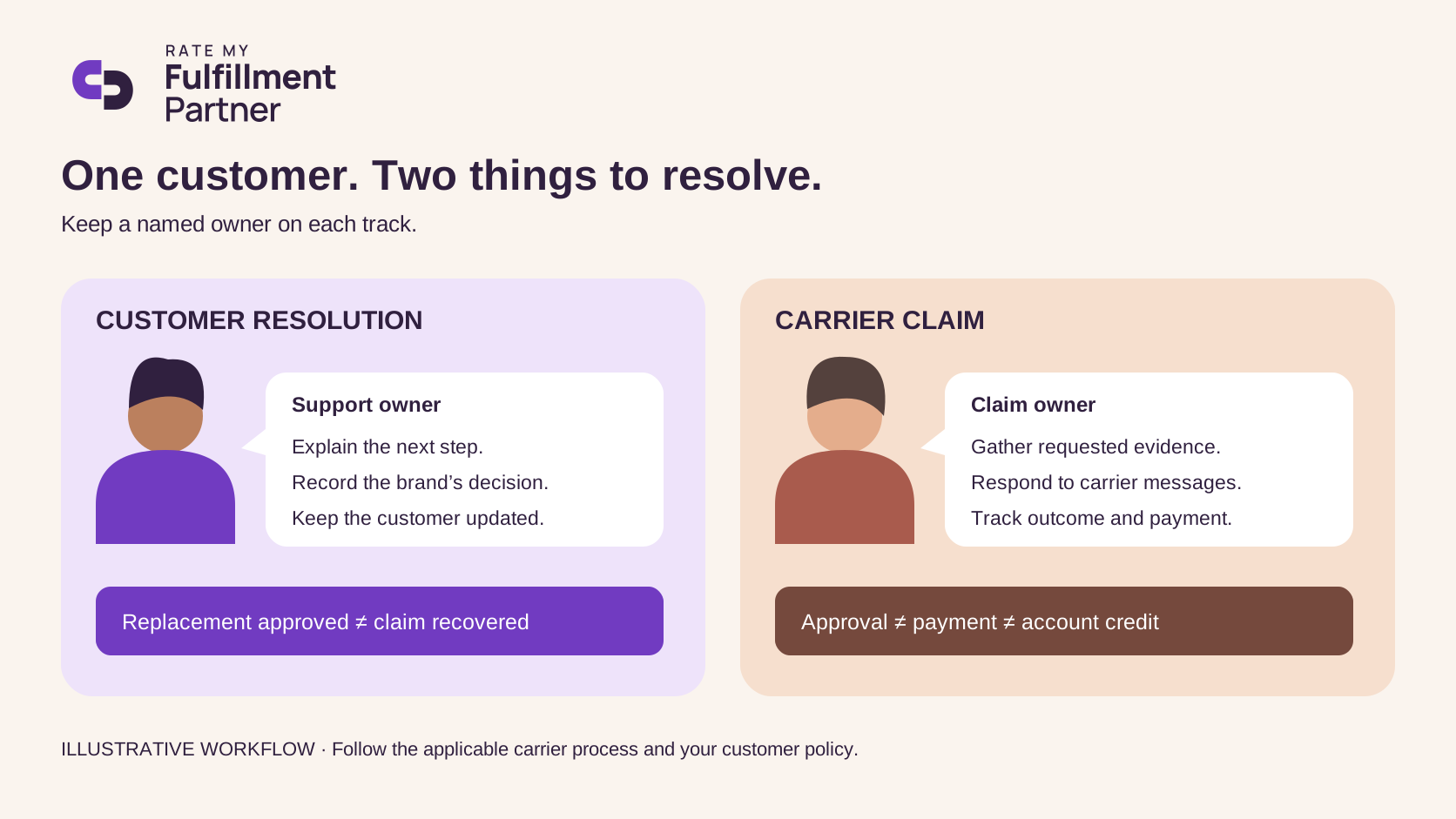 Field notes / October 25, 2026
A Parcel Claim Needs an Owner Beyond the Support Ticket
Give each parcel claim a named filing owner, evidence owner and customer-update owner. Keep carrier recovery separate from the decision to help the customer.
Read the guide →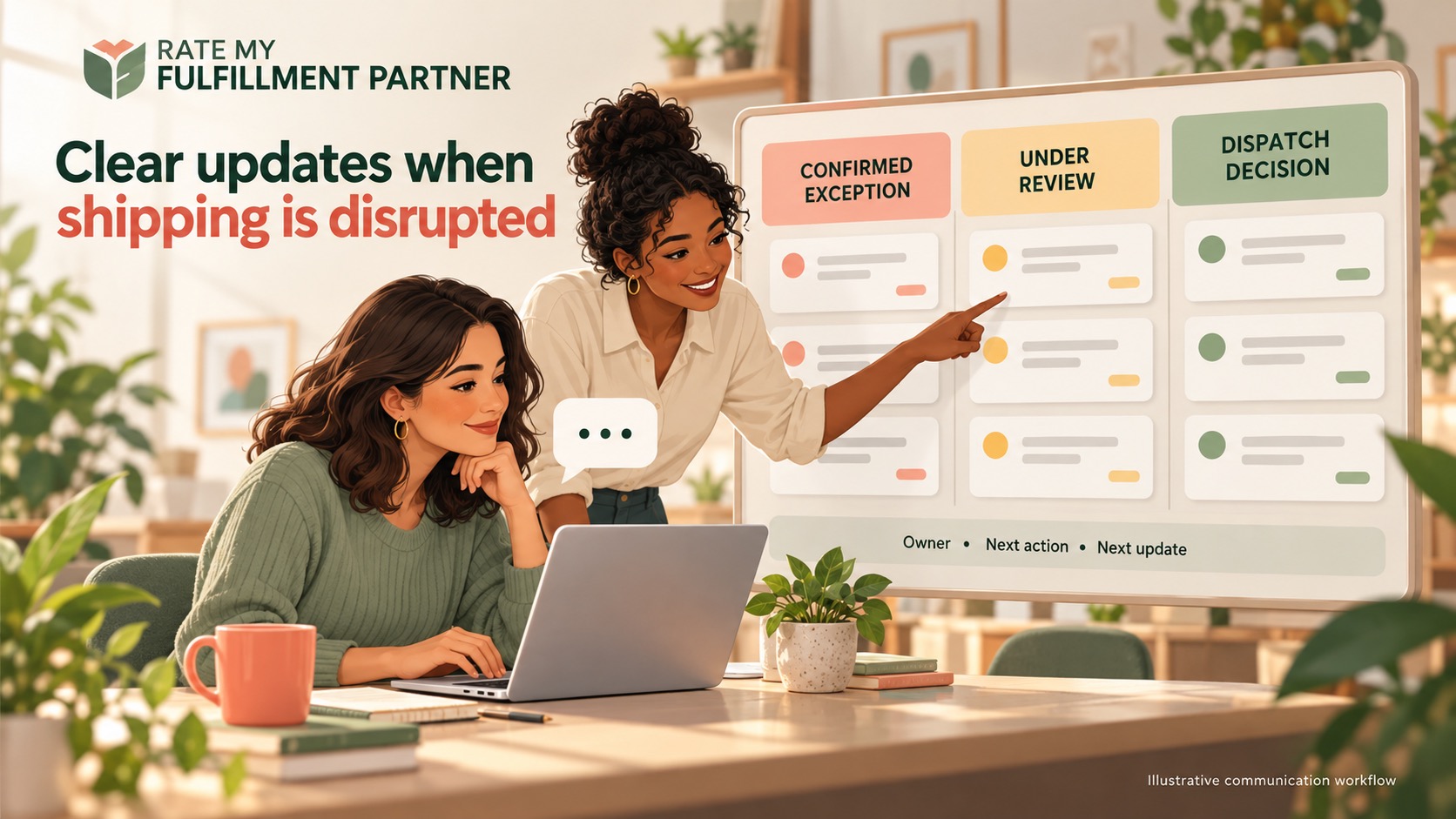 Field notes / October 25, 2026
A Carrier Disruption Update Should Say Which Orders Need Help
Ask your 3PL to separate confirmed affected orders from orders still being checked, then agree the next update and customer action.
Read the guide → Field notes / October 24, 2026
When a Small Favor Becomes a New Fulfillment Service
Turn a one-off warehouse request into a clear service agreement: define the work, approval, cost, start date and evidence of completion.
Read the guide → Field notes / October 23, 2026
Your 3PL Approved the Credit. Did It Reach the Invoice?
Track a service credit through approval, issuance and application. A friendly confirmation is useful, but the case needs a document and a matching financial outcome.
Read the guide → Field notes / October 22, 2026
The Same Fulfillment Complaint Came Back. Ask What Changed.
Close the customer case and track the process fix separately. A useful corrective action names the changed step, its owner and the next evidence check.
Read the guide →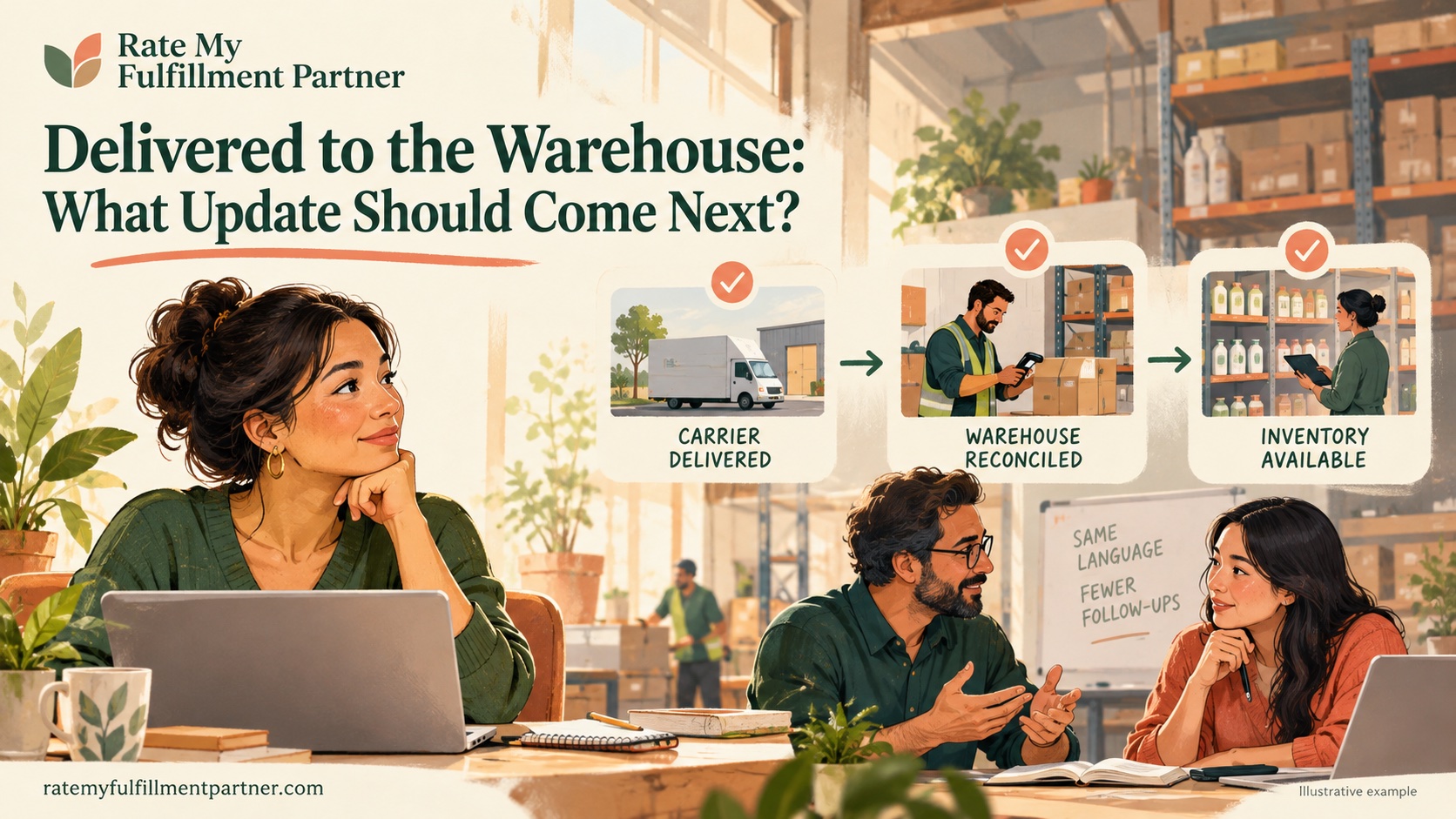 Field notes / October 22, 2026
Delivered to the Warehouse: What Update Should Come Next?
Separate carrier delivery, warehouse reconciliation and inventory availability. Ask for an owner and next update when a shipment pauses between those stages.
Read the guide →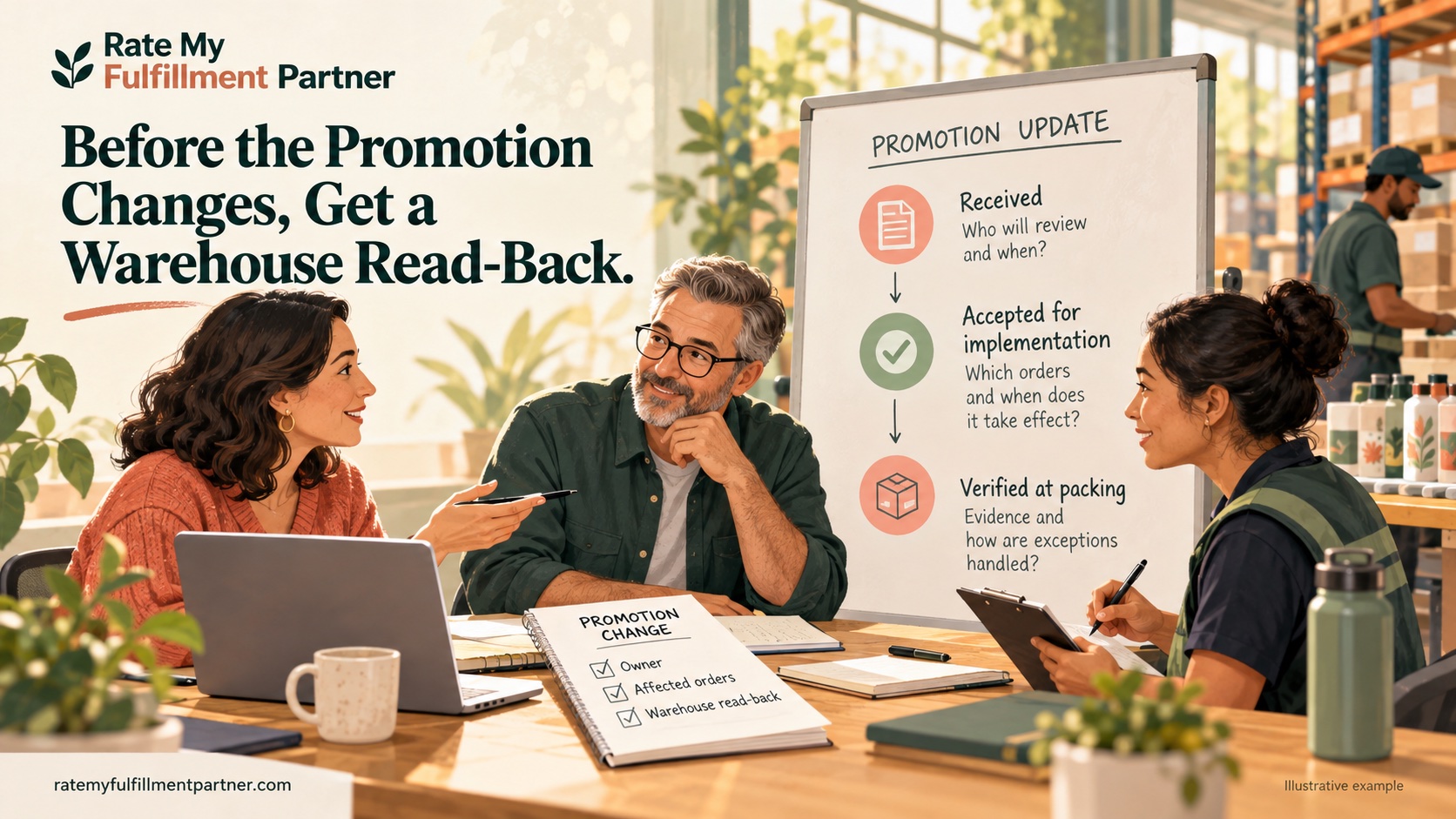 Field notes / October 20, 2026
Before the Promotion Changes, Get a Warehouse Read-Back
A promotion update needs a named owner, exact affected orders and a warehouse read-back before the brand treats the new instruction as ready.
Read the guide → Field notes / October 20, 2026
Tell Customers Who Can Sign Before the Parcel Arrives
A signature requirement is a customer instruction as well as a label setting. Have the 3PL return the exact service selected so support can explain what the recipient needs to do.
Read the guide → Field notes / October 19, 2026
Build a Holiday Support Calendar That Names the Next Owner
A useful holiday plan names who confirms pickup, who updates customers and who handles exceptions when the usual contact is away.
Read the guide → Field notes / October 18, 2026
A Retailer Deducted Money. Build One Case With Your 3PL.
Start with the retailer’s stated reason and deadline, then connect the order, shipment and supporting records. Assign one case owner without deciding fault before the evidence is reviewed.
Read the guide → Field notes / October 17, 2026
Who Can Approve a Replacement Order at Your 3PL?
Agree who may authorize replacement goods, which shipping upgrades need approval and how the replacement links to the original order. Separate helping the customer from deciding who ultimately pays.
Read the guide → Field notes / October 16, 2026
When Your Branded Box Runs Out: Give Your 3PL a Substitution Plan
Give the warehouse a short approved-alternatives list with limits and an owner. Separate cosmetic changes from changes that affect protection, required information or a customer promise.
Read the guide → Field notes / October 16, 2026
A fast reply from your 3PL is not the same as a resolved problem
Track the first useful reply, the agreed resolution and the age of still-open cases separately. A quick acknowledgment can be welcome while the underlying order or inventory problem remains untouched.
Read the guide → Field notes / October 15, 2026
Your new 3PL account manager needs the decisions, not just the login
Ask for a short decision record and a walkthrough of an unresolved case. Introductions and system access help, but the handover is incomplete until the new owner can explain the next action and its deadline.
Read the guide → Field notes / October 15, 2026
Your restock is late. Give customers a decision before another shipping estimate
Get the 3PL to distinguish supplier arrival, accepted stock and realistic dispatch. Then give affected customers a clear choice and make sure their decision controls what ships.
Read the guide → Field notes / October 03, 2026
An AI answer from your 3PL is not a completed service request
Evaluate the source behind an answer, the confirmation behind an action and the human owner of unfinished work.
Read the guide → Field notes / October 01, 2026
What your 3PL should explain before the 2027 FedEx bill arrives
Ask for an example invoice, a clear effective date and a named contact before accepting your 3PL’s FedEx rate update.
Read the guide → Field notes / September 30, 2026
When a customer hears two-day shipping, what did your 3PL promise?
Make the warehouse processing clock visible before describing a carrier service as the customer’s delivery promise.
Read the guide → Field notes / September 29, 2026
A refund should not quietly put a damaged item back on sale
Refunding money, receiving a return and approving stock for resale are separate decisions. Give support and the 3PL an explicit handoff so resolving a customer problem does not create an inventory problem.
Read the guide → Field notes / September 28, 2026
One order, two parcels: tell the customer what is still coming
A useful split-order update names the items in each parcel, what has shipped and who will explain the outstanding items.
Read the guide → Field notes / September 25, 2026
Ask your 3PL for a backlog update you can actually use
A useful backlog update names the affected orders, separates known facts from estimates and tells support when the next update will arrive.
Read the guide → UniUni / September 23, 2026
UniUni shipping rates, fuel and holiday fees: what to settle with your 3PL
UniUni advertises no fuel surcharge and 65% U.S. coverage. Understand quote-based shipping prices, holiday-fee uncertainty and the questions to settle before a pilot.
Read the brief → Carrier cost brief / September 22, 2026
Before the holiday invoice: six questions to ask your fulfillment partner
Have a clearer holiday surcharge conversation with your 3PL. Ask about fee sources, fuel calculations, invoice detail, effective dates, and corrections.
Read the brief → The working relationship / 01
Before your 3PL kickoff: make sales promises usable on the warehouse floor
The proposal says “custom packing.” Your warehouse contact thinks that means an insert. You meant tissue, a gift note, and a different box. The kickoff is where you catch that mismatch—before stock arrives.
Read the guide → The working relationship / 02
The peak-season planning call your fulfillment partner actually needs
Your 3PL needs more than “Black Friday will be big.” Bring the dates, products, order mix, and decisions your team can make if the plan changes. That is how you turn a forecast into a working conversation.
Read the guide → The working relationship / 03
How to question a 3PL invoice without losing a working relationship
The invoice is higher than you expected. Before you send “this cannot be right,” pick one line and show your calculation. A specific question gives your account manager something they can actually investigate.
Read the guide → The working relationship / 04
How to choose a fulfillment partner you can work with
You will spend more time working with your 3PL’s account team than with its sales team. Make that relationship part of the buying process.
Read the guide → The working relationship / 05
A fulfillment partnership across DTC and retail
Adding retail changes the conversations your warehouse team needs to have with you. A smooth consumer-order process does not answer every wholesale question.
Read the guide → The working relationship / 06
Meet the people who will handle your difficult days
The best time to understand account support is before you need an urgent answer. Bring these questions to the team you would work with after onboarding.
Read the guide → The working relationship / 07
What your fulfillment partner needs from you
A 3PL can store, pick, pack, and ship products, but it still needs clear information from your team. Good handoffs work in both directions.
Read the guide → The working relationship / 08
Rate your fulfillment partnership with useful evidence
Your experience with a fulfillment partner matters. A personal scorecard becomes more useful when each assessment points to a specific interaction or result.
Read the guide → The working relationship / 09
How to raise a fulfillment issue that gets a useful answer
A clear issue report gives the warehouse team something it can investigate. Use a repeatable format for missing items, stock differences, and shipment questions.
Read the guide → The working relationship / 10
Switching 3PLs: the conversations to have first
A warehouse move involves two operating teams and your own. Clear conversations can make the transfer easier to coordinate and the remaining questions easier to see.
Read the guide → The working relationship / 11
Switch fulfillment partners without losing the conversation
A warehouse move brings enough uncertainty without unclear ownership. Plan the communication as carefully as the inventory transfer.
Read the guide → The working relationship / 12
Fulfillment pricing without the invoice surprises
A good fulfillment quote should be understandable to the person who pays it. You should not need a new explanation every time the invoice arrives.
Read the guide →