
Make the urgent question smaller
An account manager asks whether to spend a little extra to fix an order. The brand's usual approver is unavailable. Someone needs to decide before pickup, and neither side wants a later argument about the invoice.
A useful exception policy answers more than “please use your judgment.” It tells the warehouse what action is allowed, which costs count toward the limit, and when the decision must return to the brand. The aim is a manageable decision at the point of work.
The GAO Green Book describes internal control as a management process supporting operational, reporting and compliance objectives. It governs federal agencies; it does not impose a private 3PL approval policy. Our spending worksheet is an editorial application of the broader idea that decisions should leave a reliable record.
Test the cumulative limit
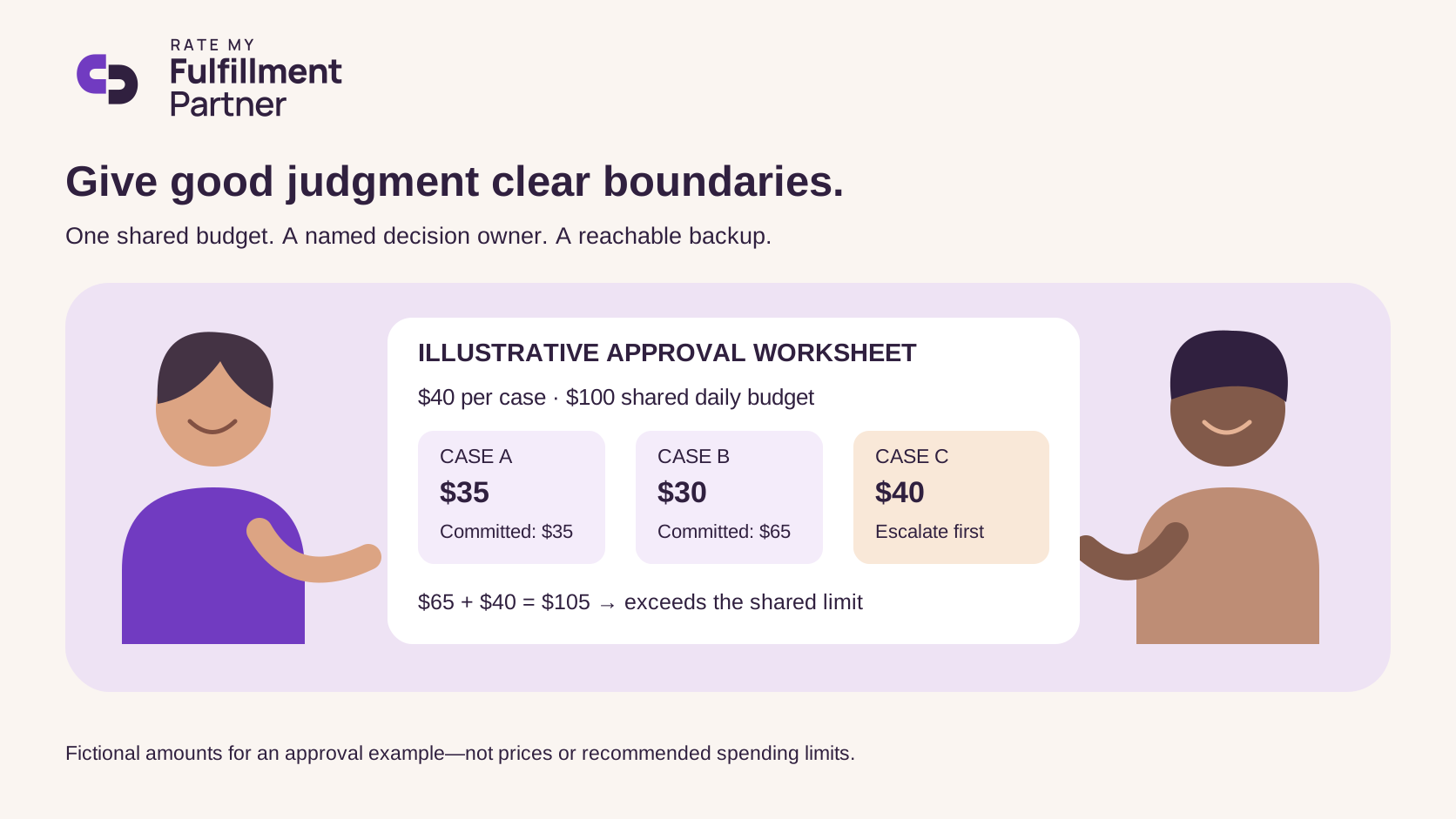
We constructed three fictional exception requests for a brand that permits approved categories of action up to $40 per case, subject to a shared $100 daily budget. The amounts include all incremental costs for the selected remedy. They are illustrative authorization limits, not market prices or recommended budgets.
| Request, in decision order | Incremental cost | Running committed total if accepted | Decision under this example |
|---|---|---|---|
| Case A | $35 | $35 | Within both limits |
| Case B | $30 | $65 | Within both limits |
| Case C | $40 | $105 | Escalate before committing |
All three pass the per-case test. The third fails the cumulative test. At that point $35 remains available, but that does not authorize a partial remedy or splitting one case into smaller requests.
Count committed spending when the action is approved, rather than waiting for the invoice. Otherwise two people can each see an apparently unused budget and promise the same dollars. Assign one shared record or an agreed owner who can reserve the amount before work begins.
Separate permission from responsibility
Approval to protect a customer's experience does not settle which party ultimately bears the expense. Keep the immediate action and the later responsibility review in separate fields. Record the original problem, selected remedy, expected incremental charge, approver and time. Reconcile the estimate to the final charge and flag any increase beyond the permission given.
The permitted categories matter as much as the number. A rule allowing a modest packaging change should not silently authorize product substitution, disposal or disclosure of customer information. Define exclusions explicitly and route those decisions to the appropriate brand contact.
Give the backup a real job
Name a primary approver and a backup with the same usable context: order reference, proposed action, cost, deadline and consequence of waiting. Specify the communication channel and who takes ownership if nobody answers. An emergency contact list is not permission to incur any amount.
Agree the safe holding action in advance. Depending on the case, that might mean holding the parcel and reporting the missed cutoff. It should not mean making an unsupported delivery promise to the customer. Customer service still needs one clear explanation of what has been decided and what remains open.
Review a small sample together
At the next service meeting, review a few actual exceptions for missing approvals, repeated causes and unexpected charges. Our three-case model tests budget logic only; it says nothing about your provider's systems or contract. Ask the account manager to demonstrate the process with your chosen limits before relying on it during a busy shift.
Good discretion has boundaries people can see. A shared limit and a reachable decision owner can make the relationship easier precisely when an order becomes difficult.
Related reading
Sources
- Source 1 — accessed 2026-11-02.